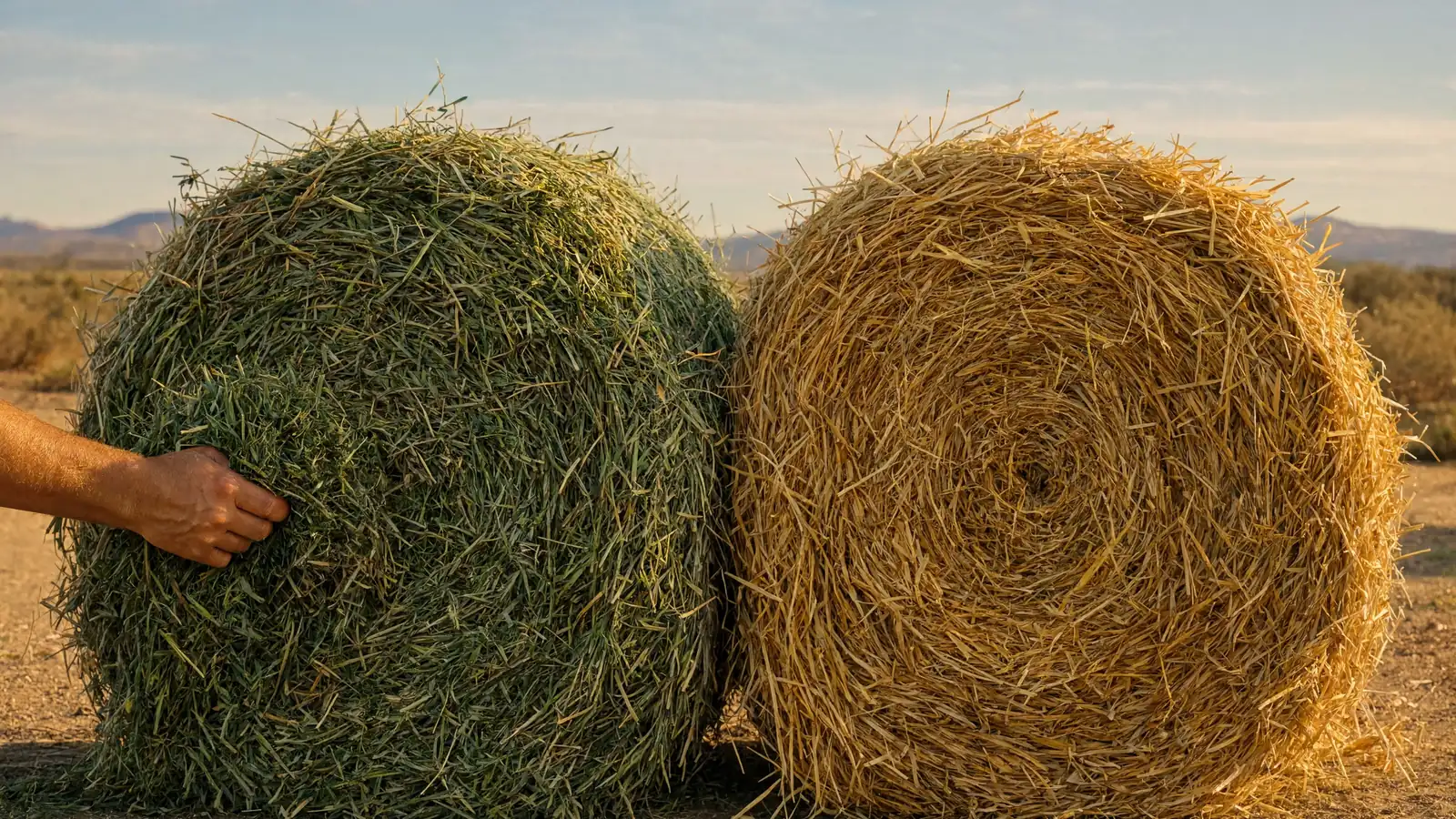
Stop asking which hay is better. It is the wrong question and it has cost this region a great deal of money. Alfalfa is not better than Rhodes grass any more than a jacket is better than a shirt. The question that actually pays is narrower and harder: which hay, for which animal, at which production stage, at which delivered price per unit of digestible nutrient. Answer that and the buying decision mostly makes itself.
Almost nobody buys that way. Buyers ring around, collect a price per bale from four traders, and take the lowest. I have watched it happen on the same yard for twenty years. Price per bale is nearly meaningless — bale weight varies, moisture varies, and nutrient density varies most of all. Two bales at the same price can differ by half in what the animal actually gets. This article is about learning to see through the bale to the dry matter inside it, and then deciding which of the Gulf's two workhorse hays that dry matter should be.
Price per bale is a trap. Learn price per kg of dry matter
A bale is a package, not a quantity. Our Rhodes grass bales run about 18 kg. Alfalfa comes in small and big bales anywhere from 25 kg up to 450 kg. Comparing a price per bale across those formats is not comparison, it is arithmetic theatre. And even inside one format, two suppliers' "same" bale can differ by several kilos because one press was set tighter than the other.
Step one: convert to dry matter
You are not buying hay. You are buying dry matter — DM — and paying to ship the water that comes with it. Take the delivered price of a bale, divide by the bale's real weight (weigh it, do not believe the label), then multiply by the dry matter fraction. Our alfalfa spec runs to a maximum of 12% moisture, which is to say at least 88% dry matter. A bale delivered at 18% moisture is 82% dry matter — you just paid for six extra points of water and, as we will get to, bought yourself a mould problem at the same time. Do this once with a calculator on the bonnet of a pickup and you will never look at a price list the same way again.
Step two: divide by the nutrient you are short of
Dry matter is progress, not the answer. Your animal does not need generic dry matter; it needs protein, or energy, or simply fibre to keep a rumen turning over. So take your price per kg of DM and divide again by the fraction of what you are short of. Alfalfa carries 16–18% crude protein. Rhodes grass carries 8–10%. If protein is the constraint, alfalfa can be roughly twice the hay per kilo of DM — and the price gap between the two decides whether that is a bargain or a bad trade. If protein is not the constraint, the alfalfa premium buys you nothing at all. You are paying for a nutrient the animal will burn as energy and urinate out as nitrogen.
What alfalfa is actually for
Alfalfa — دريس البرسيم — is a legume, and that single fact explains almost everything about it. Legumes fix their own nitrogen, so they build protein cheaply and carry a lot of it: 16–18% crude protein in our spec. They are high in calcium. They are highly digestible, which means the animal can eat more of them per day and clear the rumen faster. And they are leafy, which matters far more than most buyers realise.
Where it earns its price
Alfalfa earns wherever the animal is building something. Lactating animals — a she-camel in milk, a ewe or doe raising twins — are exporting protein and calcium out of their bodies daily and need it replaced. Growing stock are laying down muscle and skeleton. Fattening animals are converting feed into carcass against a deadline. In all of those cases, higher protein and higher digestibility both matter, and the second one matters more than people credit: a more digestible forage means higher voluntary intake, and higher intake is often the real limit on performance in Gulf conditions, not the ration on paper.
Where it is money burned
Feeding straight alfalfa to dry maintenance animals is one of the most common and most expensive mistakes in this region. A dry she-camel standing in a pen, a wether, a doe between kiddings — none of them are building anything. They need fibre to keep the rumen working, enough energy to hold condition, and the minerals the forage does not supply. Buying 16–18% protein for that animal means paying a protein price for a fibre requirement. The excess protein is not stored. It is deaminated, converted to urea, and excreted — you are paying a premium to make expensive urine, and asking the animal's liver and kidneys to do the work of throwing your money away. Give that animal good Rhodes grass and a mineral block and put the difference in your pocket.
Leaf loss: the protein you shake onto the floor
Here is the part nobody teaches and everybody pays for. In alfalfa, the leaf holds most of the protein and the stem holds most of the crude fibre. The leaf is also fragile, especially when the hay is dry, and it shatters off the stem under rough handling. So when you drop bales off a truck bed onto concrete, when you tumble them across a yard, when you feed on a windy day, when you buy hay that was baled bone-dry in the heat of the afternoon — you are physically separating your protein from your purchase and leaving it on the floor. The 16–18% you paid for was measured in the field, not at the manger.
So judge alfalfa on leaf-to-stem ratio before you judge it on anything else, and handle it like it is fragile, because it is. A stemmy alfalfa bale with the leaf shaken out of it is an expensive grass hay. Look at the bottom of the trailer when the load comes off: if there is a green carpet of leaf down there, that carpet is the difference between what you paid for and what you got.
Rhodes grass: the sensible default, and why it grows here
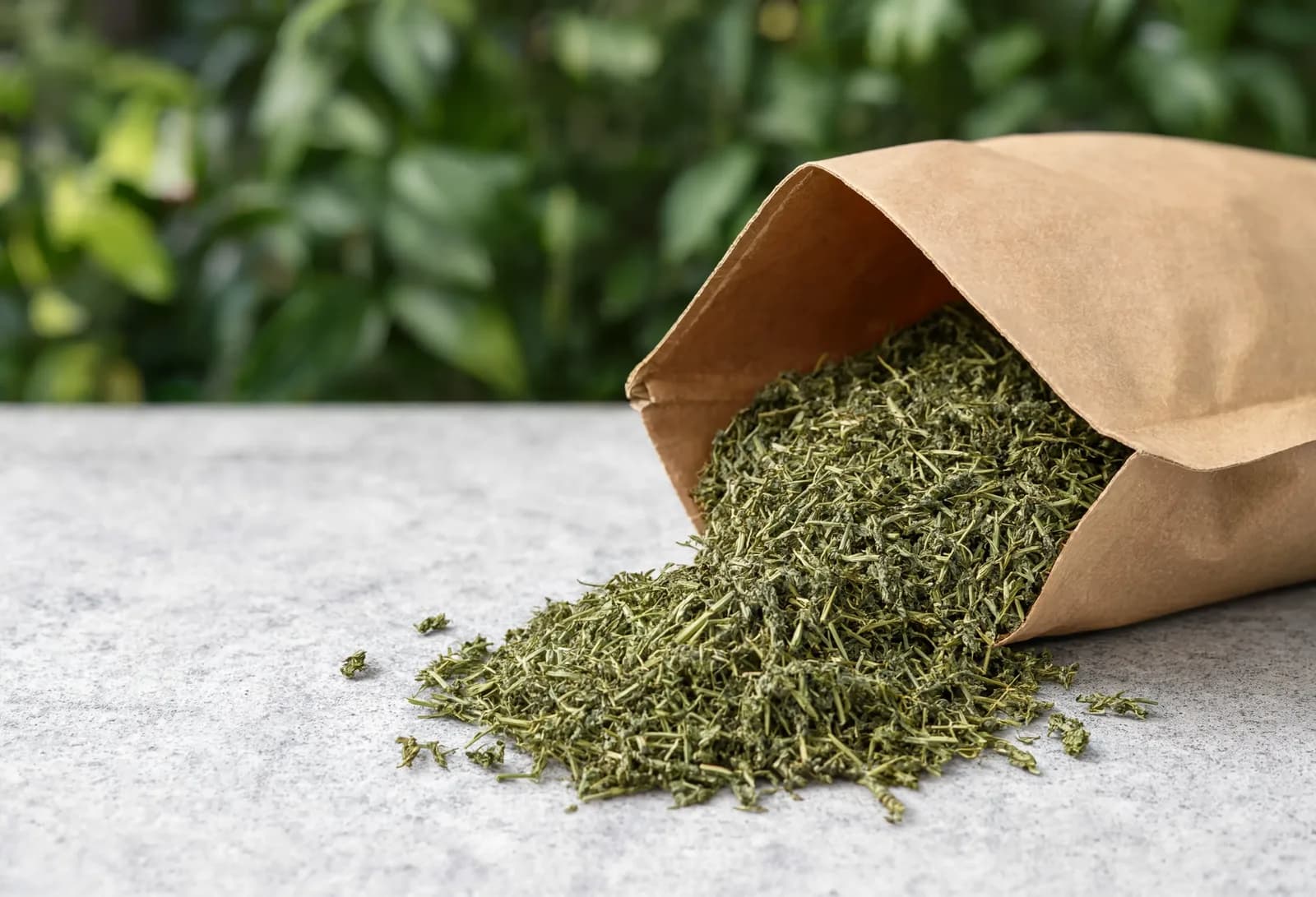
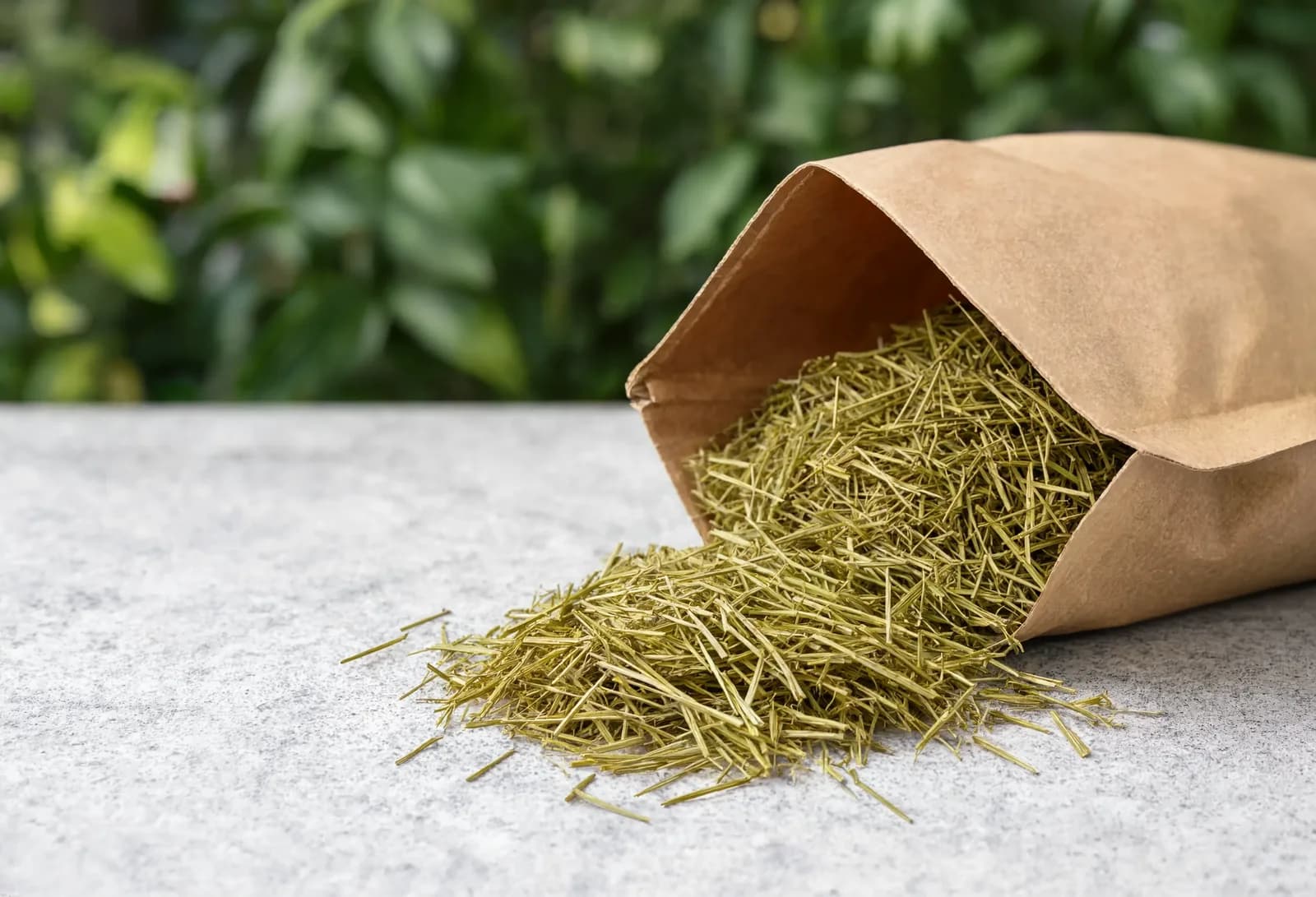
Rhodes grass — دريس الرودس — is the Gulf's everyday roughage, and it holds that position for reasons that are agronomic before they are commercial. It tolerates saline irrigation water and saline soil to a degree that most forages simply do not. That is not a small footnote in a region where groundwater salinity is the binding constraint on what can be grown at all. Rhodes grass survives water that would kill a stand of alfalfa, and it does it in this heat. That is why the region grows it, why the region is used to it, and why it is the correct default rather than a compromise.
Nutritionally it is the mirror of alfalfa: 8–10% crude protein, good fibre, and very palatable when it is cut and cured properly. Animals eat it willingly, which is a genuine virtue and not a throwaway line — a superb hay that an animal picks at is worse than a decent hay it cleans up. For the great majority of animals on a normal day, Rhodes grass is the base of the ration, and everything else is an adjustment on top of it: barley or a concentrate when the animal needs more energy, alfalfa when it needs more protein, a mineral block for what neither hay supplies.
Ask which cut you are being sold
A perennial grass stand is harvested repeatedly through the season. The first harvest after the stand establishes or breaks dormancy is the 1st cut, then it regrows and you take a 2nd cut, then a 3rd, and so on. The cuts are not interchangeable. First cut typically carries more stem, more seed head and more weed pressure, because the plant has had a long uninterrupted run at growing coarse. Later cuts regrow from an established root system in warmer conditions, come up finer and leafier, and are generally more consistent. Our Rhodes spec is 2nd/3rd cut, and that is not decoration on a datasheet — it is the difference between hay an animal cleans up and hay it sorts through.
So ask. A supplier who cannot tell you the cut either does not know what he is selling or does not want you to know. Both answers are useful.
The honest comparison: complements, not substitutes
Here is the table. Read it as the shape of the difference, and note that the only hard numbers in it are the ones on our own specifications — anything else varies by origin, cut and season, and a trader who quotes you decimals for the rest is guessing with confidence.
| Attribute | Alfalfa hay | Rhodes grass hay |
|---|---|---|
| Plant type | Legume — fixes its own nitrogen | Grass — perennial, warm-season |
| Crude protein | 16 – 18% | 8 – 10% |
| Fibre | Lower, more digestible — faster rumen turnover | Higher — the structural fibre a rumen needs to work |
| Calcium | High — relevant to lactation and growth | Modest |
| Salinity tolerance in the field | Limited — largely why it is imported | Strong — why the Gulf grows it |
| Handling | Fragile — leaf shatter takes the protein with it | Robust — tolerates handling far better |
| Our bale format | Small & big bales, 25 – 450 kg | Bales ~18 kg |
| Spec detail to insist on | Moisture max 12% and leaf-to-stem ratio | Cut — 2nd / 3rd |
| Where it earns | Lactation, growth, fattening, camels in milk | Maintenance and the daily base of nearly every ration |
| Where it is wasted | Dry maintenance animals — a fibre need at a protein price | Fed alone to a high-producing animal — it cannot keep up |
Now read the last two rows together, because that is the whole argument. These hays are not competitors on a shelf. They fail in opposite directions. Alfalfa fails by oversupplying protein to an animal that only wanted fibre. Rhodes fails by undersupplying a milking she-camel that needed more than it can carry. Almost every serious operation in the UAE, Saudi Arabia, Oman, Kuwait, Qatar and Bahrain should be running both, in a ratio set by the animal's stage — not choosing one and defending the choice.
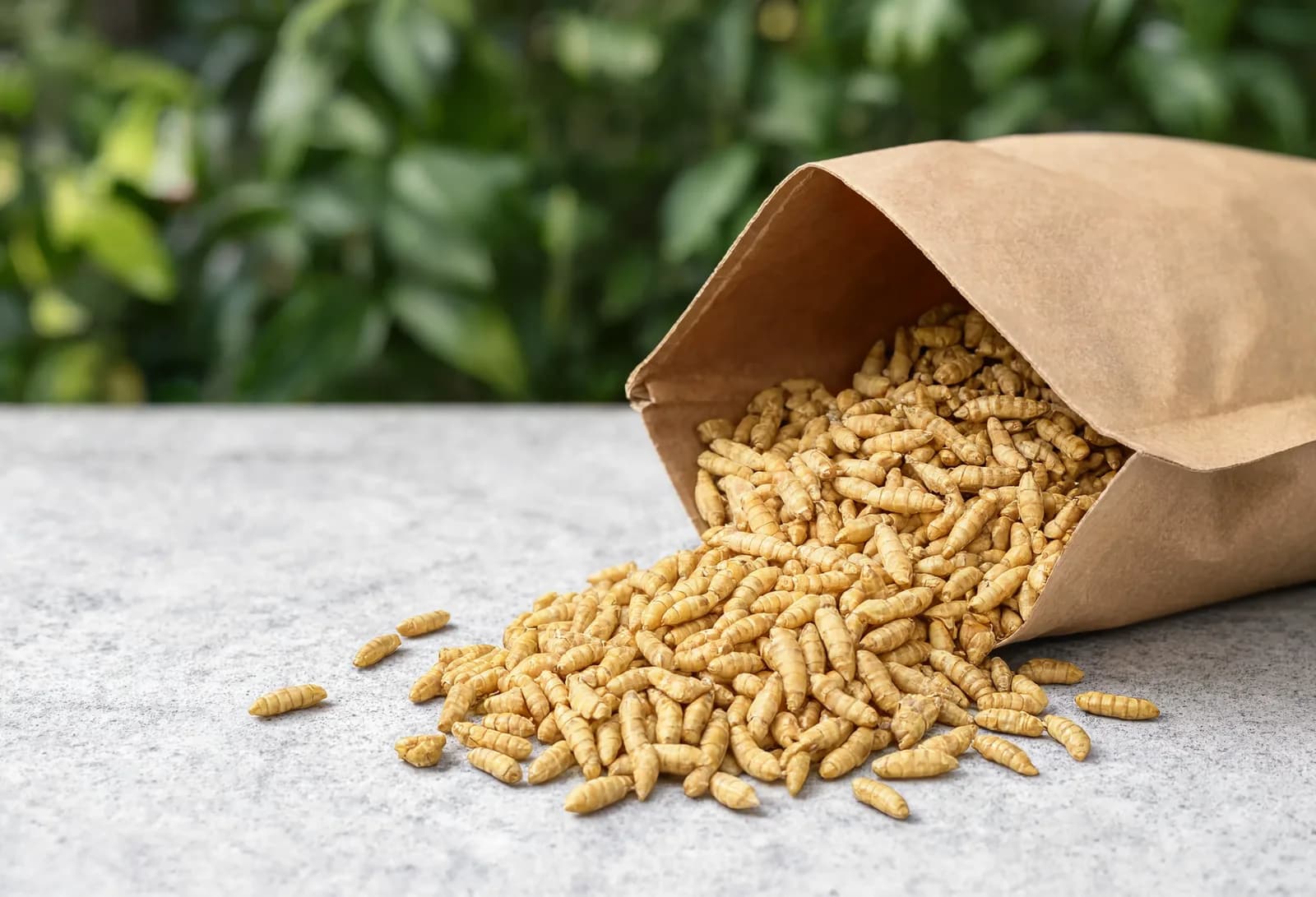
And two hays do not make a ration. Between them they leave two gaps, and both are easy to close. Energy is the first: when an animal in late pregnancy, peak lactation or a fattening pen needs more calories than any roughage can deliver at the intake it can physically achieve, that gap is grain. Feed-grade barley is the region's workhorse for it — buy it screened, on test weight (ours runs a minimum of 62 kg/hl) and at a moisture that will survive your shed, and introduce it gradually, because a rumen that meets a lot of starch suddenly will tell you about it. Minerals are the second: neither alfalfa nor Rhodes grass delivers a complete trace mineral profile, and salt in particular is not optional in this climate for animals sweating in this heat. A free-choice lick block is the cheapest insurance on the yard.
Camels, sheep and goats are not the same customer
Camels
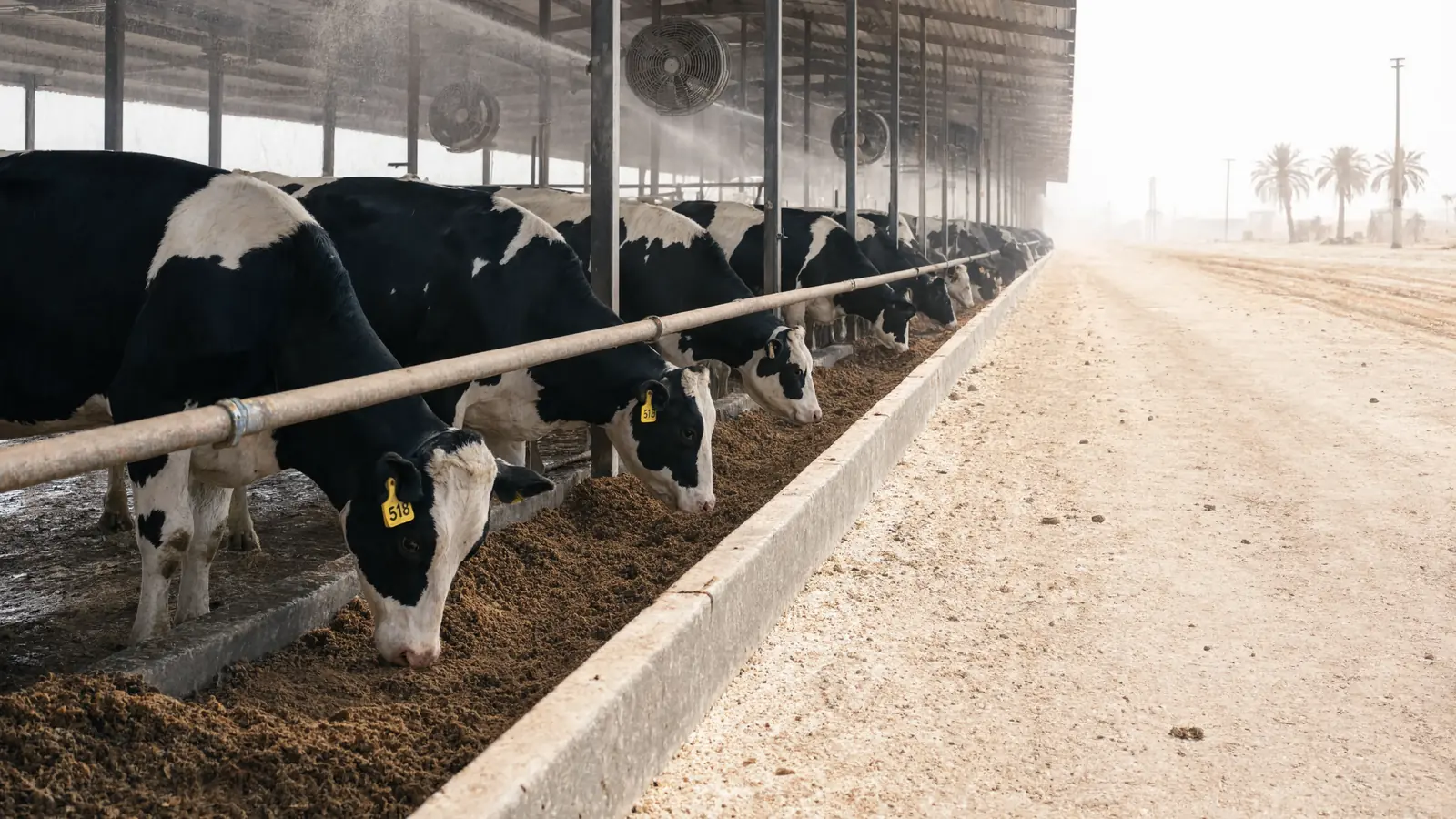
The camel is a browser by nature, not a lawnmower. Left alone it works its way across a landscape taking leaves, shoots and shrubs — including coarse, thorny, salty material that would leave a cow standing hungry. Its digestive system is remarkably good at extracting value from poor fibre: it retains material longer, ferments it harder, and recycles nitrogen with an efficiency that sheep and cattle cannot match. Understand that and camel feeding stops being mysterious. This is an animal engineered for exactly the kind of roughage Rhodes grass is, and it will hold condition on forage that would let a dairy cow slide.
Two practical consequences. First, camels are opinionated about palatability and openly fond of salt — a preference that comes straight from the halophytic plants they evolved on. Use it. A lick block is accepted readily by camels, and it is the simplest way to cover the mineral gap a hay-only ration leaves. Second, and I will keep saying this until it stops being necessary: a maintenance camel fed alfalfa is money burned. That animal has one of the finest fibre-digesting systems in the livestock world and you are paying premium protein prices to bypass it. Save the alfalfa for the she-camel in milk, where the demand is real and the response is visible in the pail.
Sheep and goats
People say "sheep and goats" as one word and then wonder why the goats waste hay. Goats browse; sheep graze. A goat wants to eat upward — leaves, tips, the fine and the fragrant — and it will sort through a manger picking out the best material and leaving the stem behind. That is not fussiness, it is the animal doing what it is built to do. It has a real commercial consequence: feed a stemmy hay to goats and your refusal rate climbs, and refusal is hay you bought, shipped, stored and then swept up. Goats reward leafy forage and good alfalfa more visibly than sheep do, because they will actually clean it up. Sheep are less selective and will do honest work on a good Rhodes grass.
One caveat that belongs in bold, and it concerns the mineral block. Sheep are sensitive to copper. They accumulate it in the liver over time with no outward sign until the animal is in serious trouble, and blocks formulated for cattle, camels or goats can carry copper at levels a sheep should not be receiving long-term. This is not a reason to skip mineral supplementation — it is a reason to read the label and match the block to the species. If sheep and other stock share a pen and a block, that is a conversation to have with whoever formulates your minerals, before it becomes a conversation with a vet.
The fattening season and Eid
The Gulf forage market has a calendar, and if you buy as though it does not, it will bill you for the education. In the run-up to Eid al-Adha, demand shifts hard toward protein-dense roughage. Animals go into fattening pens across the region on a shared clock — everybody wants condition on the same animals in the same weeks — and alfalfa is exactly what a fattening ration wants. Predictable demand meets forage that has to be booked, freighted and landed months earlier. The operators who come through that window comfortably are the ones who committed volume well before it, not the ones ringing around for spot bales three weeks out.
Judging hay at the truck, without a lab
A lab tells you the truth eventually. The truck is leaving now. Every forage buyer needs a set of judgements he can make in five minutes standing on a trailer, and they are learnable. Work through these in order, every load, and do not let a driver's schedule rush you — the twenty minutes you save is not worth the twenty tonnes you accept.
- Colour, but do not worship it. Green suggests the hay was cured without rain damage or sun bleaching. A pale, straw-coloured bale has usually lost something. That said, the surface of any stack fades in Gulf sun — judge the colour inside a broken bale, not on the outside of the stack, or you will reject good hay and accept bad.
- Leaf-to-stem ratio. On alfalfa this is the single most important visual judgement you will make, because the leaf is the protein. Break a bale open. Are you looking at leaf held on stem, or at sticks with a green dust at the bottom? On Rhodes grass, look for fineness and the absence of heavy seed heads — a coarse, headed bale is telling you about its cut.
- Smell it. Good hay smells sweet and faintly grassy. A musty, sour or cellar-like smell means mould, and your nose will find it before your eyes do. A sharp, tobacco-like or caramelised smell means the bale heated after baling. Trust this test — it is the most sensitive instrument you own and it costs nothing.
- Dust. Slap a bale and watch the air. A cloud is bad news and usually means mould spores rather than soil. Dusty hay is a respiratory problem for the animals and for the man feeding them, and in horses it is a serious one. Some dust is dirt from a badly set cutter bar; that is a quality complaint. A lot of dust is a rejection.
- Mould and heat at the core. Open a bale from the middle of the load, not one off the top that has been sitting in the breeze. Look for white or grey patches, felted material, or bales that have discoloured in bands. Then put your hand or a probe into the core: it should be at ambient temperature. Warm hay is fermenting hay.
- Moisture at the bale core — the classic hidden defect. This is the one that ends careers. Hay baled before it is properly dry looks perfectly good on the outside and is quietly going wrong on the inside. Microbial activity in a wet core generates heat, the heat feeds more activity, and a tight stack has nowhere to shed it. At best you get mould and lost feeding value. At worst a stack heats to ignition and you lose the barn. Ask for a moisture reading, take your own at the core with a probe, and treat a supplier's shrug as an answer.
- Foreign matter. Weeds, soil, stones, baling twine, plastic, and — in the worst cases — carcass material from a field animal that met the mower. Scan a broken bale properly. Weed content is also a fair proxy for how the stand was managed, which tells you what the rest of the season's cuts will look like.
- Bale weight consistency. Weigh a sample — not one bale, several from across the load. Consistent weights mean a well-run press and a supplier who controls his process. Wild variation means you cannot price the load per kg of DM with any confidence, and it means somebody is not watching the baler. Both matter.
Buying forage into the Gulf: freight, storage, season, paperwork
The nutrition above is true anywhere there is a rumen. What follows is specific to buying forage into this region, and it is where the margin usually lives or dies. The Gulf imports the overwhelming majority of the forage it feeds. That single fact reshapes every decision below it.
- Freight is a large fraction of delivered cost, which makes bale density a commercial number, not an agronomic one. You pay to move volume, and a loosely pressed bale means you are paying to ship air across an ocean. This is why compaction matters and why big bales exist. Compare suppliers on what lands in your yard per kg of DM, not on what leaves theirs.
- Storage in Gulf heat and coastal humidity is where good hay goes to die. Covered, off the ground on pallets, and off the walls — those three are not housekeeping, they are the whole discipline. Hay wicks moisture straight up from a concrete slab and straight in from a wall that sweats. An uncovered stack through a humid coastal month in Dubai, Doha or the Batinah is the fastest way to manufacture mould out of hay you already paid for. Leave air gaps between rows and let the stack breathe.
- Prices behave seasonally and predictably, which is the useful part. Demand concentrates around the fattening and Eid window, and supply is set by growing seasons in origin countries months before it reaches Jebel Ali or any other regional port. Good operators lock supply before summer rather than shopping in the middle of it. Buying spot in a tight market is not a strategy, it is a symptom.
- Documentation is decided before the vessel sails, and forage has its own regime. Plant material crossing a border attracts phytosanitary requirements from the destination authority — the point being that a consignment which is agronomically perfect and documentarily wrong does not feed anything; it sits at the port accruing storage while somebody emails. Confirm the current requirement with the relevant authority in the destination country for each shipment. It changes, and last year's answer is not this year's answer.
- Single-sourcing punishes you exactly once, and always at the worst moment. When a shipment slips in the week your fattening pens fill, a supplier holding regional stock is worth a genuine premium — and you will not negotiate that premium down while you are the one who needs hay on Thursday.
Frequently asked questions
Can I feed my camels only Rhodes grass hay?
For maintenance animals, largely yes — a camel's fibre digestion is exceptional and Rhodes grass at 8–10% crude protein suits an animal that is not producing. Add a mineral lick block, because no hay supplies a complete trace mineral and salt profile. But a she-camel in milk, growing stock or animals in a fattening pen need more protein and energy than Rhodes grass alone can deliver at the intake they can physically achieve. That is where alfalfa and barley come in.
Why is alfalfa more expensive than Rhodes grass?
Two reasons, and only one is about nutrition. Alfalfa carries roughly double the crude protein — 16–18% against 8–10% — so you are buying more nutrient per kg of dry matter. The other reason is agronomic: alfalfa is far less tolerant of the saline water and soil that define farming here, so the Gulf grows Rhodes grass and imports much of its alfalfa. Freight and origin economics are built into the price you see.
What does "2nd cut" or "3rd cut" mean, and should I care?
A perennial forage stand is harvested several times in a season; the cut number is which harvest your hay came from. First cut usually carries more stem, more seed head and more weed pressure. Later cuts regrow from an established root system and generally come up finer, leafier and more consistent. Yes, you should care — it affects palatability, refusal rate and how much of the bale the animal actually eats. Ask, and treat a supplier who cannot answer as a warning.
How do I tell if hay was baled too wet?
Not from the outside — that is exactly what makes it the classic hidden defect. Open bales from the middle of the load and check the core, not the surface. Warmth in the core is the tell: hay at ambient temperature is fine, warm hay is fermenting. Add a musty or caramelised smell, felted white or grey patches, and banded discolouration. Take your own moisture reading with a probe rather than accepting a number on paper.
The bottom line
Run both. Rhodes grass is the base — it is what this region grows because it is what this region's water allows, it is what a camel, a ewe or a doe wants on a normal day, and it is the correct default for every maintenance animal you own. Alfalfa is the tool you reach for when an animal is building something: milk, muscle, a skeleton, a carcass before Eid. Set the ratio by the animal's stage, close the energy gap with barley, close the mineral gap with a block, and stop there.
And take the position that matters more than either hay: buy dry matter, not bales. Weigh the bale, check the moisture at the core, look at the leaf, ask for the cut. Do that consistently and you will pay less per unit of nutrient than the man who rang four traders and took the lowest price per bale — while feeding better hay than he does. That is the entire trade. The rest is twine.
Sourcing this, or trialling it?
We trade animal and bird nutrition from Dubai, in direct contact with the manufacturers behind every product, with a certificate of analysis on every batch. Tell us the specification you need and we will tell you honestly whether we are the right supplier for it.