Here is the sentence most seed sellers will not write: a seed mix is not a complete diet. It is not a complete diet in a premium bag, it is not a complete diet with fruit and nuts added, and it is not a complete diet because the label says balanced. A good mix is a good part of a diet that also includes fresh food, and for many species a formulated pellet. Anyone telling you otherwise is selling you something.
That admission is not modesty. It is the only honest starting point, because of one fact that governs everything else in this article: parrots are selective feeders. Offer a mix and the bird will eat the sunflower seeds and leave the rest. Which means the diet the bird actually consumes is not the diet printed on the bag. Every other question — what to buy, how clean it is, how to store it, which species it suits — sits downstream of that fact. So we start there.
The bird eats the diet it chooses, not the one you bought
Why it happens
Two reasons, and neither is the bird's fault. Fat is delicious, and it is calorie-dense, and a wild parrot that preferentially took the richest item in front of it was a wild parrot that survived. Sunflower is the richest item in most mixes. Second, parrots are intelligent, dexterous and bored. Sorting a bowl is a puzzle with a reward at the end, and a bird with a whole day and nothing else to do will solve it every single time. You are not going to out-stubborn a grey.
What it produces
A bird eating the top 30% of a mix by preference is eating a diet far higher in fat than the blend was ever designed to deliver, and far lower in almost everything else. Seed-only diets are well known in avian practice for tending toward low calcium and low vitamin A, and high-fat intake over years is associated with obesity and fatty liver change. This is general nutritional background, not a diagnosis — if you have a bird you are worried about, that conversation belongs with an avian vet, not with a feed article and not with a pet shop counter. What we can say flatly is this: the nutritional gap is not created by a bad mix. It is created by a good mix eaten selectively.
What to do about it
The fix costs nothing and almost nobody does it. Four things, in order of how much they matter:
- Offer less mix than the bird can sort through. If the bowl holds more than a day's food, the bird has the luxury of choosing. If it holds roughly what the bird needs, the choosing gets much less rewarding. Measure the portion once, watch for a week, adjust.
- Do not top up a half-eaten bowl. This is the single most common mistake in pet-bird feeding and it is free to stop. A bowl that gets refilled every time it looks low is a bowl the bird never has to finish — you are running a permanent sunflower buffet and throwing away the rest. Let the bowl get down to the leftovers before it is emptied and refilled fresh.
- Understand that a full-looking bowl can be an empty one. A bowl of husks with a few rejected seeds underneath looks fed. It is not. Blow the husks off before you judge whether the bird has eaten.
- Build the rest of the diet around the mix, not on top of it. Fresh vegetables, and for many species a formulated pellet, are what close the gap that seed alone leaves open. Which balance suits your species and your individual bird is a question for an avian vet who has actually seen it.
What's in the bag, and what each part is for
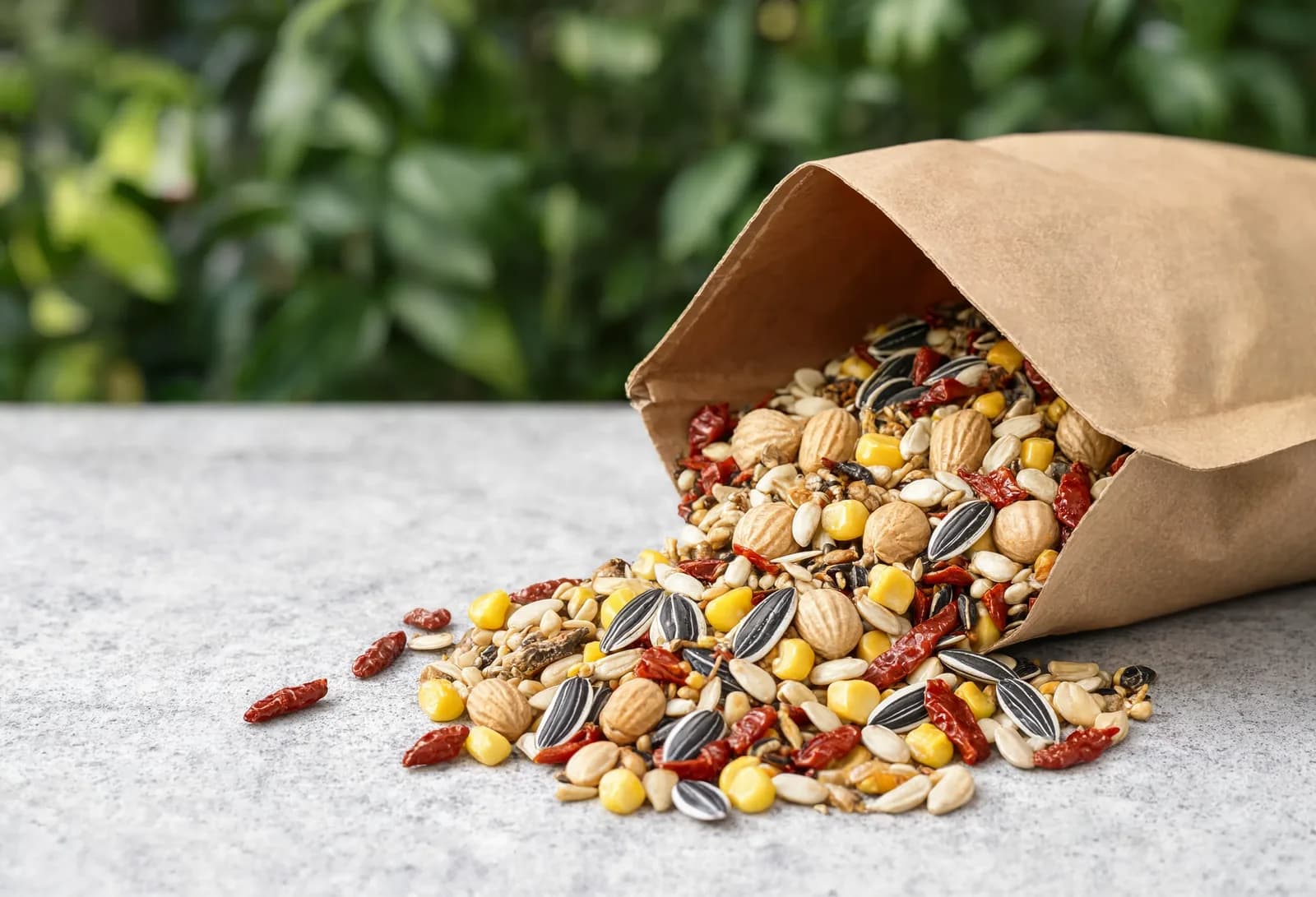
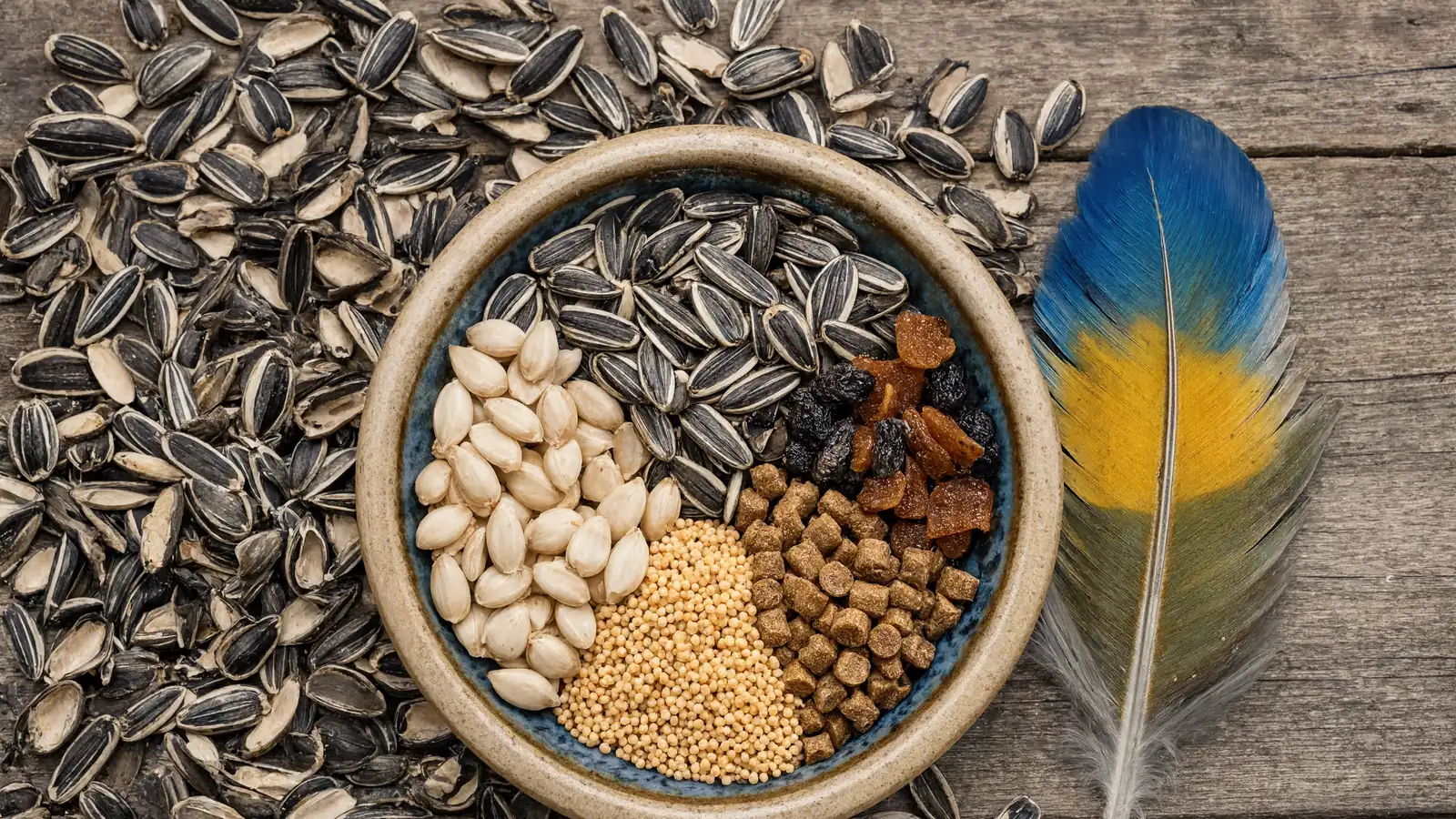
Our own Premium Parrot Mix is a cleaned, hand-checked blend of sunflower, safflower, dried fruits, nuts and pumpkin seed. That is a normal, sensible component list for a medium-and-large parrot mix, and the components are not the interesting part. The proportions are. Here is what each one is doing, and what it costs you.
| Component | What it provides | The catch |
|---|---|---|
| Sunflower | Energy and fat, high palatability, easy to shell — the workhorse of every parrot mix | The one the bird strips out first. Cheap per kilo, which is exactly why weak mixes lean on it. Generous-looking, poor-feeding. |
| Safflower | A seed of similar character to sunflower that many birds treat as less of a prize — useful as part of the energy fraction | Still an oilseed. It is not a low-fat substitute, and the folklore that birds dislike it is inconsistent bird to bird. |
| Pumpkin seed | A large, structured seed that takes real work to open — chewing time as much as nutrition | Bulky and more expensive per kilo, so it is the first thing cut when a mix is built to a price. |
| Nuts | Dense fat and energy, and the highest-value foraging item in the bowl | Genuinely appropriate for macaws, genuinely risky as a large fraction for cockatoos and amazons. Species-dependent, not universally good. |
| Dried fruit | Variety, colour, interest — it changes how the bowl is approached, which matters more than it sounds | It is not fresh food and does not replace it. Sugar-dense, and often the fraction the bird ignores until everything else is gone. |
Read the sunflower row and the pumpkin seed row together and you have the entire economics of the category. Sunflower is the cheapest thing in the bag and the thing the bird most wants. Pumpkin seed and nuts are the most expensive and the easiest to quietly reduce. A mix built to hit a price point drifts toward sunflower every time, and the bag still looks full and glossy, because sunflower looks like generosity. Judge a mix by what is in it besides sunflower.
Cleaning, purity and a test you can run at home
We specify our parrot mix at 99.9% purity. That figure only means something if you understand the 0.1%, so let us be specific about it. What is not seed in a bag of seed is dust, chaff and broken hulls; soil, small stones and other field pickup; weed seed and plant fragments from the same harvest; and, at the bottom of the honesty scale, insect fragments and droppings from storage that went wrong somewhere earlier in the chain. A supplier who cannot tell you which of those they clean for is telling you they do not look.
Why dust is not a cosmetic issue
Birds have a respiratory system built for efficiency, with air moving through the lungs in a way that leaves very little slack. It is superb at extracting oxygen and it is unforgiving about what else is in the air. Seed dust in an enclosed room — and in the Gulf, that room is air-conditioned and closed for most of the year — is a genuine environmental load on an animal that is already sensitive to airborne irritants. That is why dust extraction and hand-checking are not presentation. They are the part of the process that the bird actually breathes. It is also why our songbird blend is specified as dust-extracted and graded rather than simply clean: fine seed carries proportionally more dust, and small birds are smaller.
The sprout test
Purity tells you what is in the bag. It tells you nothing about whether the seed is alive. Seed that has been sitting for two years, or has been through a hot container and a hotter warehouse, is dead — and dead seed is a fair proxy for degraded seed. Here is a test that takes five minutes of effort and three days of waiting, costs nothing, and will tell you more about a supplier than any datasheet:
- Count out a sample from the middle of the bag, not the top. Twenty to thirty seeds of one type — sunflower is the easiest to read.
- Soak them in clean water overnight, then drain. Do not leave them sitting in water — they need to be damp, not drowned.
- Spread them on damp kitchen paper in a covered dish, somewhere warm but out of direct sun. Rinse once a day so nothing goes sour.
- Read it at day three. Most of the sample should have visibly split and pushed out a root. If most of it has sprouted, the seed is fresh and was handled reasonably. If a lot of it sits there and starts to smell, that seed is old, heat-damaged, or both — regardless of what the bag says.
Run it once on a bag you trust so you know what a good result looks like. Then run it on a bag you are considering. Retailers: run it on an incoming batch before you put forty sacks on the floor. It is the cheapest quality control in this trade and almost nobody bothers.
Storing seed in the Gulf: this section is not filler
A parrot mix is mostly oilseed, which means a bag of it is mostly fat, which means it goes rancid. That is not a defect. It is chemistry, and heat and humidity are the accelerator pedal. Rancid seed is unpalatable — birds refuse it, and a bird refusing food is a problem — and it is nutritionally degraded before it ever smells wrong to you. Your nose is a late-stage detector. In Dubai in August, the clock runs faster than anywhere your supplier's shelf-life figure was calculated.
Then there is the livestock you did not order. Storage mites and seed moth thrive in exactly the warm, humid conditions this region supplies for free. A sack that sits open in a store room through a Gulf summer is not storage — it is a culture medium. The practical rules:
- Airtight, not folded over. A clip on a paper sack keeps nothing out. Decant into sealed containers the day the bag arrives, and keep them out of the sun and away from the kitchen and the window.
- Cool and dark beats big and cheap. Every degree you take off the storage temperature buys real time against both rancidity and infestation.
- Freeze what you are not using now. Splitting a delivery and putting the back half in the freezer in sealed portions is the single most effective thing a Gulf bird keeper can do with seed. Let a portion come back to room temperature sealed before you open it, so condensation forms on the outside of the container rather than on the seed.
- Buy the pack size that matches actual consumption. Two birds do not consume a 20 kg sack before a Gulf summer consumes it first. That is why our parrot mix ships in 1, 5 and 20 kg — the 20 kg is for an aviary or a shop with turnover, and the 1 kg exists precisely so that nobody has to store a sack they cannot use. A cheaper price per kilo on seed you end up throwing away is not a cheaper price.
- Know which reality you are storing for. A bird kept indoors in year-round air conditioning and a bird kept in an outdoor aviary are two completely different storage and feeding problems. The aviary keeper is fighting ambient humidity, insects and a bowl that sits in the heat all day; the indoor keeper has an easier storage job and a harder dust and boredom job. Do not take advice built for one and apply it to the other.
Species matter more than the label admits
Our parrot mix is specified for medium and large parrots — African greys, macaws, cockatoos and amazons. Those four are not one audience, and a mix that is right for one of them is not automatically right for the next.
African greys
Greys are widely discussed in avian medicine as a species where calcium status deserves particular attention, and a seed-selective grey is by definition eating the low-calcium version of its diet. That is worth stating carefully and stopping there: what a specific bird needs, whether supplementation is appropriate, and how it should be handled are questions for an avian vet who can examine the animal. What a feed supplier can honestly tell you is the upstream half — that seed alone is not where calcium comes from, and that a grey left to sort a bowl unsupervised is making its own version of that problem worse.
Macaws
The exception that proves the rule. Macaws are one of the few cases where a genuinely higher fat requirement makes meaningful nut content appropriate rather than indulgent. A macaw is a large bird with a beak engineered for exactly this work. If you keep macaws, the nut fraction of a mix is a feature you should be checking for, not a marketing flourish you should be discounting.
Cockatoos and amazons
The opposite problem, and it is the more common one in this region. Both are strongly associated with obesity in captivity, and both are enthusiastic, capable sorters. A high-fat mix eaten selectively by an amazon in an apartment with a full bowl and a long day is close to a worked example of how the problem develops. For these two, portion discipline is not optional housekeeping — it is the main intervention available to you.
And if your bird is small
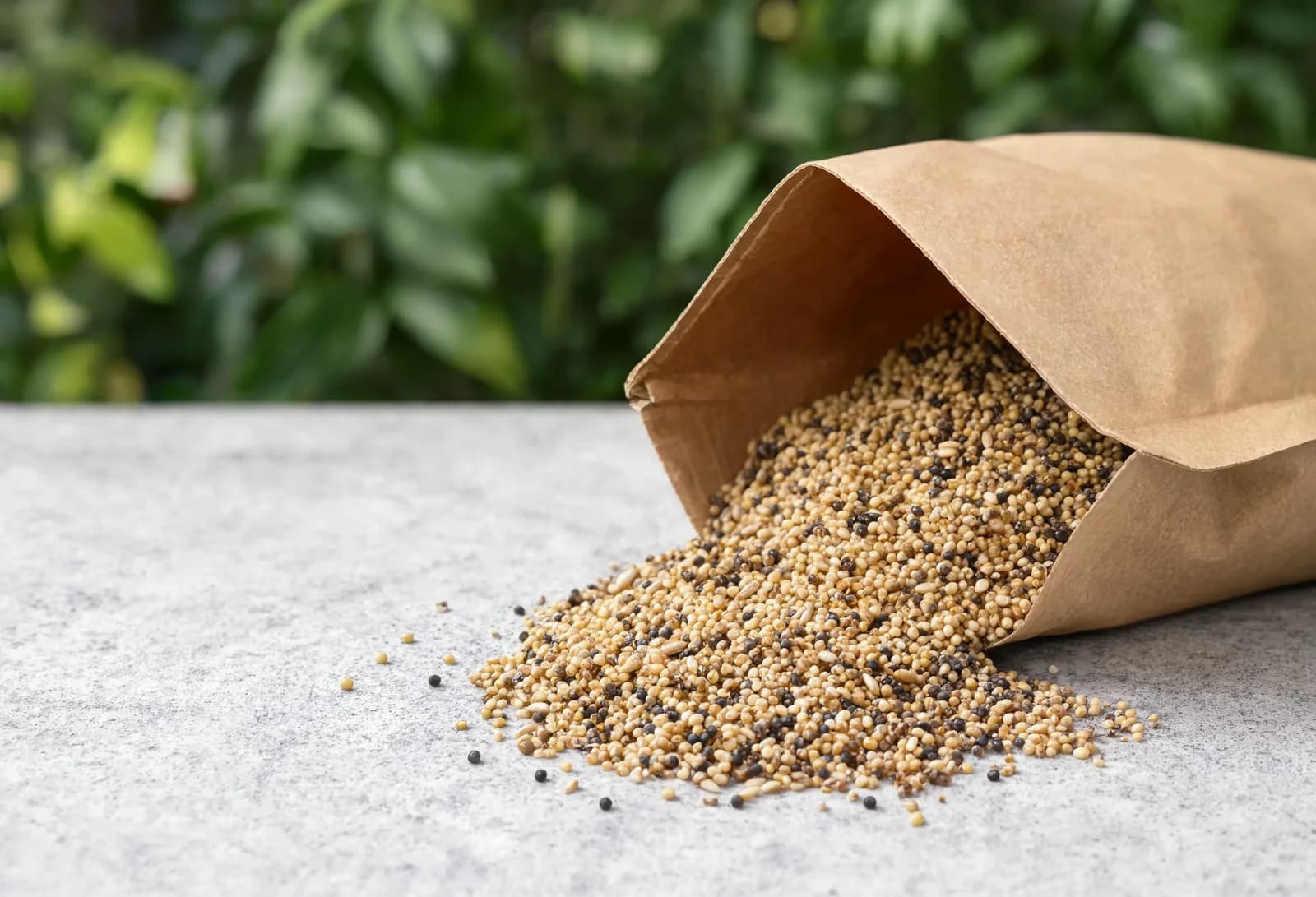
Then this is the wrong bag. Canaries, finches and other small songbirds are not served by a large-parrot mix — the seed is the wrong size, the fat profile is wrong, and a finch cannot open a pumpkin seed. They need a fine-seed blend built for them: canary seed, rape, niger and millet, dust-extracted and graded. Buying the parrot mix for a canary because it is the premium one on the shelf is a genuine and common mistake.
Where insects and animal protein fit
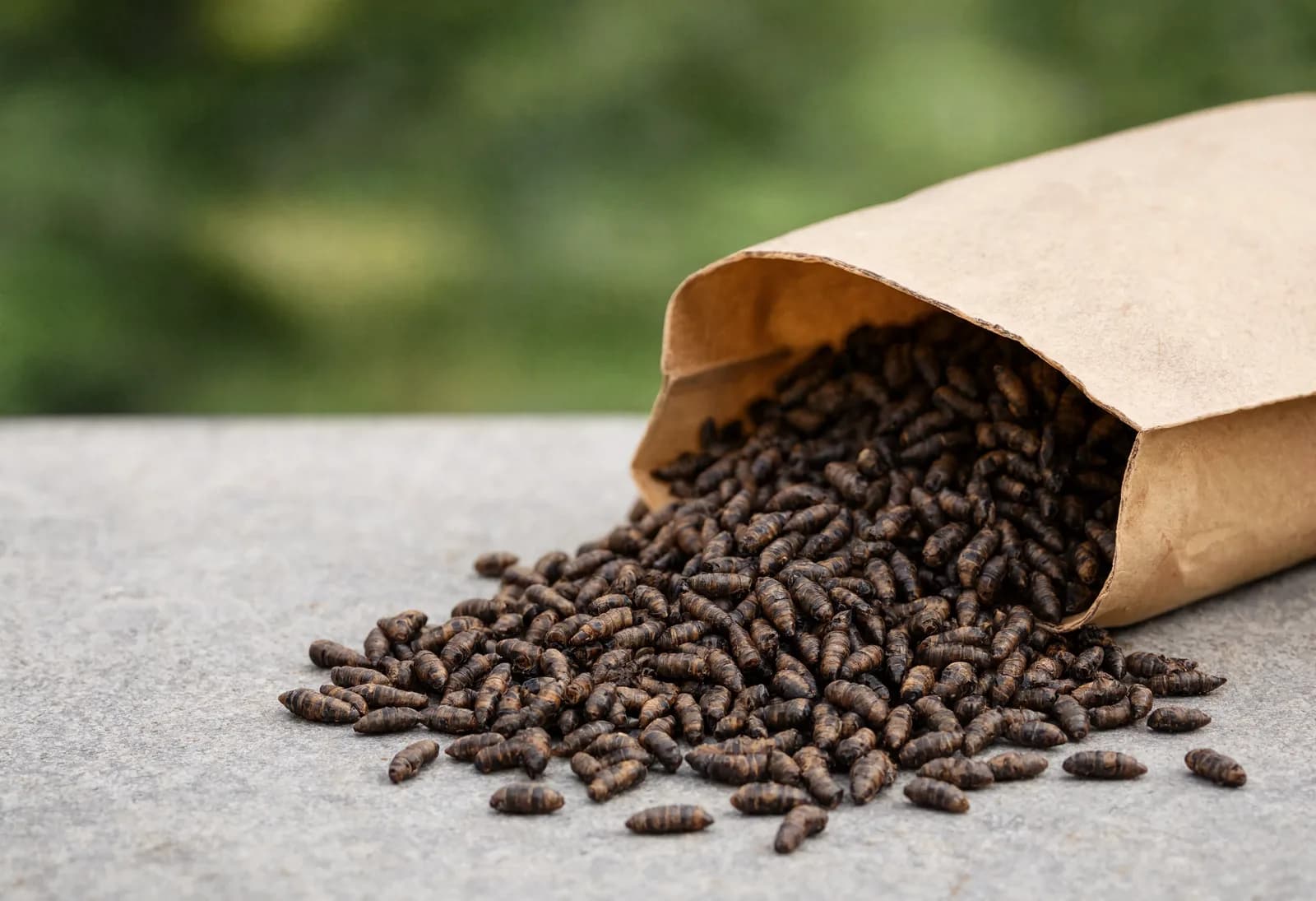
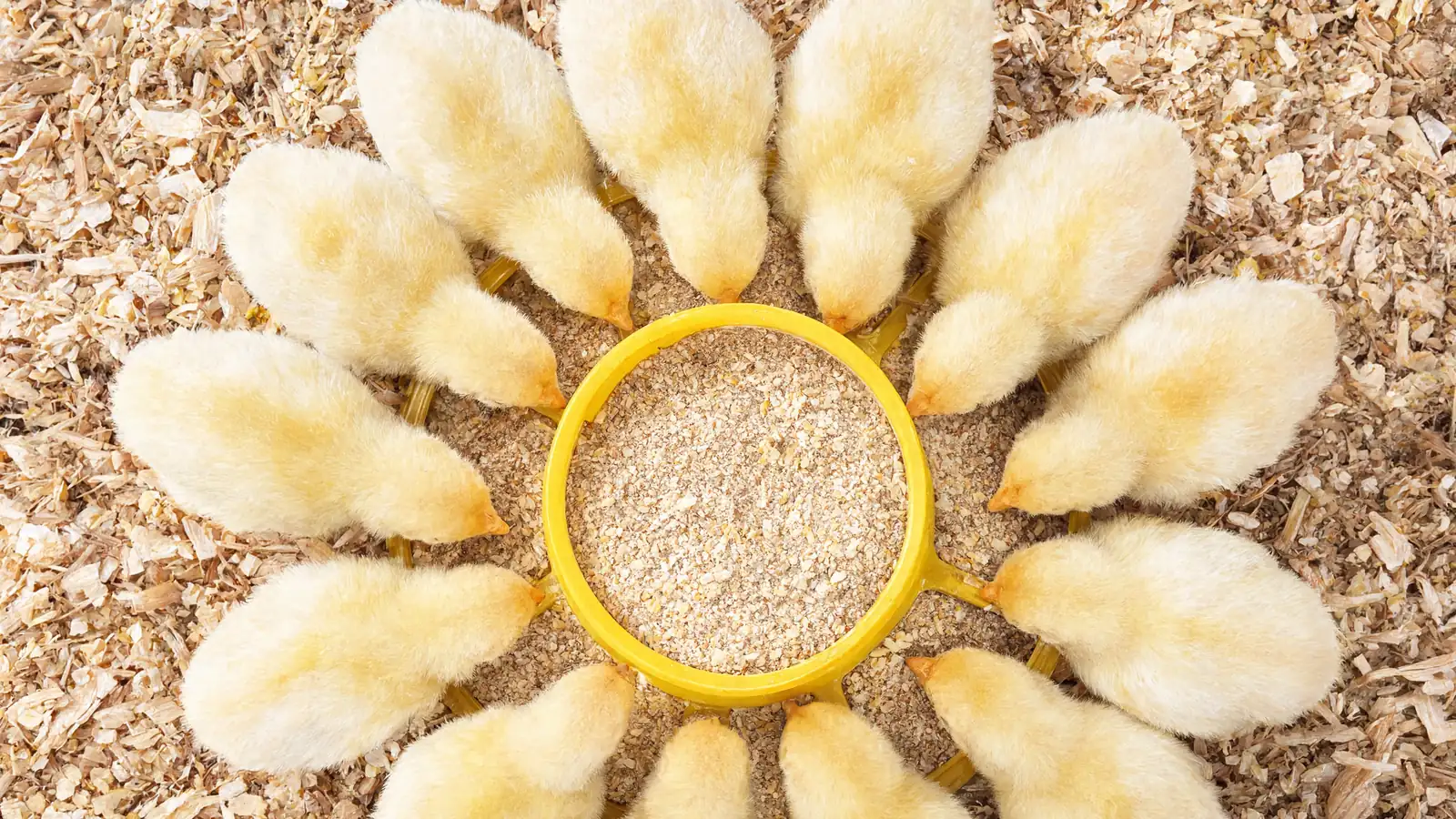
Not every bird in the pet trade is a seed eater. Insectivorous and omnivorous species take animal protein as a normal part of what they eat, and dried black soldier fly larvae are a clean, traceable, shelf-stable way to offer it — no live-food logistics, no smell, no colony in the spare room. Birds generally take to them with obvious enthusiasm, which is exactly where the discipline has to come from you rather than from the bird.
The cap is firm and we state it on the product: for poultry and pet birds, treat feeding up to roughly 2–5% of daily dry feed, and it must not displace the main diet. BSFL is a single ingredient, not a standalone complete diet, and its composition varies markedly with rearing substrate, harvest stage and drying — which is why every batch ships with its own COA, substrate declaration and microbial report. Fed inside that cap it is a good, useful, enrichment-friendly supplement. Fed to a bird that has learned to hold out for it, it becomes the same selective-feeding problem as sunflower, with better marketing.
The other side of the counter: buying for a shop
The UAE and the wider GCC are a large, affluent and genuinely serious pet-bird market. This is not a region where birds are an afterthought — it is a region with deep, old expectations about how a bird should be kept, shaped in part by a falconry culture where feed quality, condition and the state of a bird's feathers are read closely by people who know exactly what they are looking at. That cultural literacy spills into the pet trade. Your customer may well know more than your counter staff.
Which shapes how you buy. A fast-moving 1 kg pack beats a slow-moving 20 kg sack in this climate, even though the sack looks better on a cost-per-kilo line. Turnover is a preservation strategy here, not a finance metric: seed that leaves the shop in three weeks never gets the chance to go rancid on your floor, and seed that sits for five months does, whatever the printed date claims. Match your pack mix to how your customers actually buy — most pet-bird owners have one or two birds, not an aviary. Ask for batch consistency and ask what happens when a batch is off, because the pet trade is unforgiving in a specific way: a customer whose bird gets sick, or dies, does not complain and does not come back. They just stop, and they tell people. There is no volume discount that covers that.
One more thing that gets learned expensively: bird feed crosses a border like any other feed material. Import documentation, health and origin paperwork need to match the destination authority's current requirements — MOCCAE in the UAE, and the relevant national authority elsewhere in the GCC. Requirements are updated periodically, so confirm them per shipment rather than assuming last year's file still applies. A batch that is perfectly clean and documentarily wrong sits at the port getting hot.
Frequently asked questions
Can a parrot live on a seed mix alone?
It can live, for a while. That is not the same as being well fed. Seed-only diets are long associated in avian practice with low calcium and low vitamin A, and because parrots eat selectively, the real intake is fattier and narrower than the blend on the label. Treat a mix as one component alongside fresh food, and for many species a formulated pellet. What the right balance is for your particular bird is a question for an avian vet.
My bird only eats the sunflower seeds. What do I do?
You are describing normal parrot behaviour, not a broken bird. The two changes that work cost nothing: offer a measured portion rather than a bowl the bird can sort through, and stop topping up a half-eaten bowl. Constant refilling means the bird never has to move past its favourite item. Let the bowl come down to the leftovers, then empty and refill it fresh. Expect the change to take weeks, not days, and if the bird is losing condition, involve an avian vet.
How should I store parrot seed in Dubai?
Airtight containers, cool, dark, out of the kitchen and away from any window. The mix is mostly oilseed, so heat and humidity drive it toward rancidity and invite storage mites and seed moth. The most effective habit is to split a delivery and freeze the portion you will not use soon in sealed bags, letting each portion return to room temperature still sealed so condensation forms outside the container. And buy the pack size you will actually finish — a 20 kg sack for two birds is a false economy here.
What does 99.9% purity actually mean?
It means that after cleaning, grading and hand-checking, no more than a thousandth of the weight is anything other than the seed you bought. The 0.1% is dust, chaff and broken hulls, field pickup like soil and small stones, weed seed, and sometimes insect fragments from bad storage earlier in the chain. Dust is the part that matters most to the bird: an avian respiratory system is efficient and unforgiving about airborne irritants, which is why extraction is not cosmetic. Purity says nothing about freshness — for that, sprout a sample.
The bottom line
Judge a mix on three things and ignore the rest of the bag. What is in it besides sunflower, because sunflower is the cheap part that looks like generosity. How clean it is and whether it is alive, because purity is a claim you can verify and freshness is one you can sprout. And whether the pack size matches what you will actually finish before a Gulf summer finishes it for you. Then accept the thing the marketing will not say: the mix is one part of the job. The rest is fresh food, portion discipline, a species-appropriate plan, and an avian vet you already know before you need one. Buy the mix on those terms and it is worth what it costs. Buy it as a complete diet and no amount of quality will save you, because the bird was never going to eat the label.
Sourcing this, or trialling it?
We trade animal and bird nutrition from Dubai, in direct contact with the manufacturers behind every product, with a certificate of analysis on every batch. Tell us the specification you need and we will tell you honestly whether we are the right supplier for it.