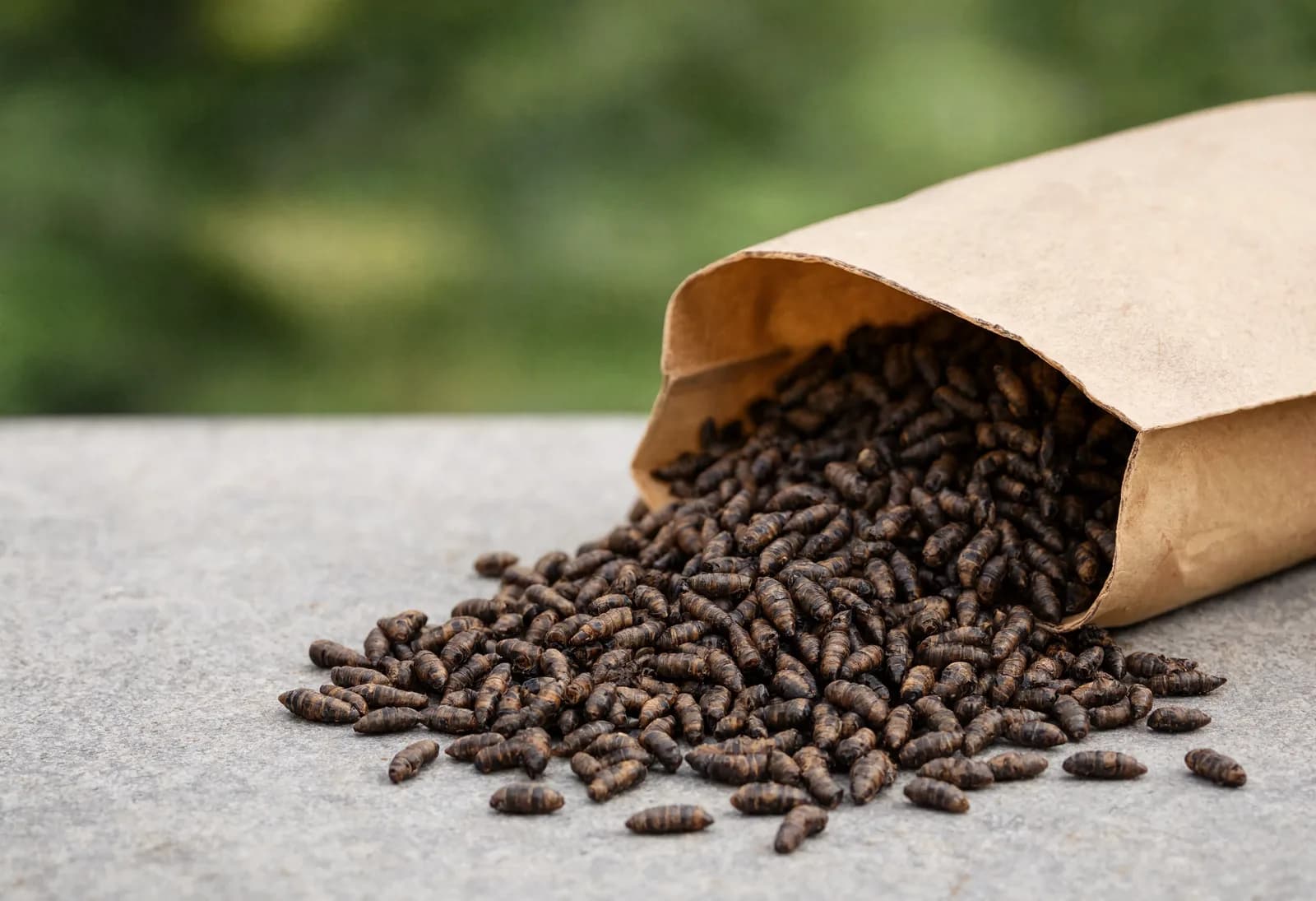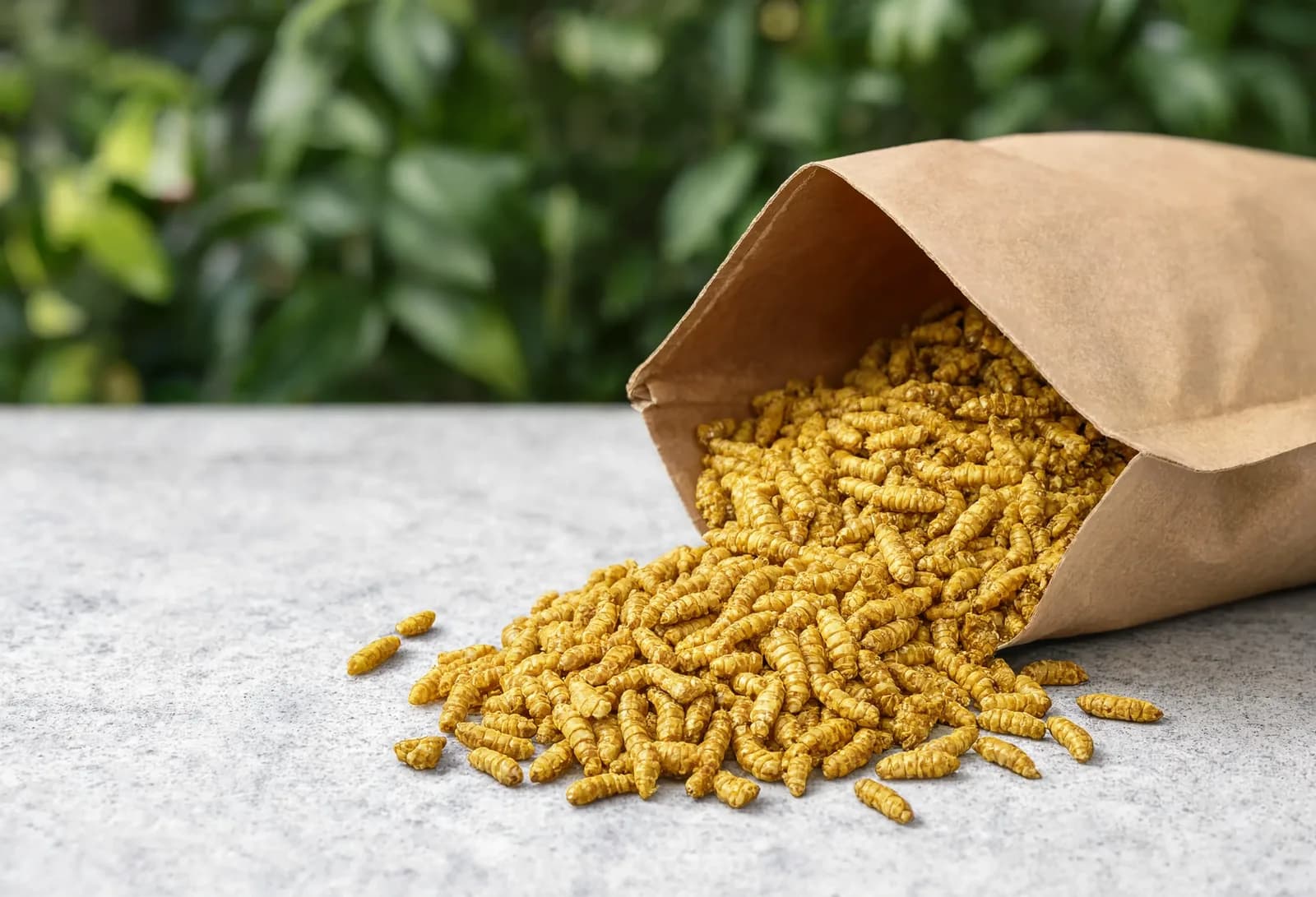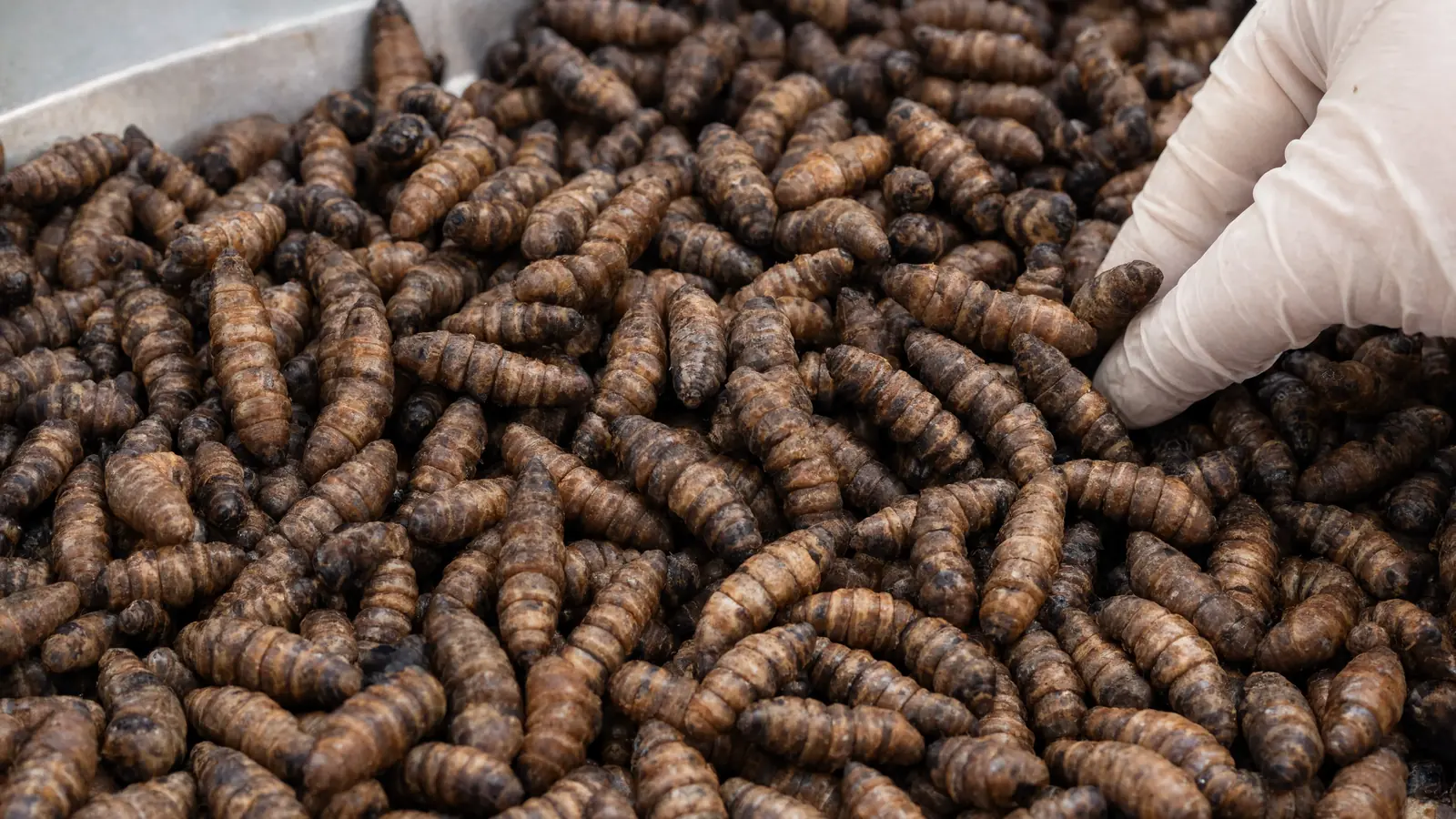
Black soldier fly larvae arrived in the feed trade with more noise than any ingredient in a generation. Insects as protein, waste converted to food, a fraction of the land and water — the story writes itself, and for about five years it has been writing itself in every trade publication and investor deck in the sector. Most of that story is directionally true. Almost none of it tells a buyer what to do with a bag of dried larvae on a Monday morning.
So let us set the sustainability argument aside — not because it is wrong, but because it is not a nutrition specification and it is not a purchase decision. What follows is the ingredient itself: what dried Hermetia illucens larvae are, why two batches can differ enough to matter, where the published evidence actually applies and where it very much does not, and what a Gulf buyer needs on paper before a container moves. BSFL is a good ingredient. It is sold in a market that has not yet learned to describe it honestly.
First principle: this is an ingredient, not a diet
The single most common error in this category is not a formulation error. It is a category error. Dried BSFL is a raw material — protein, energy-dense fat, minerals and chitin in one package — and it is bought by people who then feed it as though it were a food. A parrot owner in Dubai buys a five-kilo bag because the birds go mad for it. A backyard layer keeper scatters a handful twice a day because the hens sprint across the run for it. Six weeks later the birds are eating less of their complete ration, and the ration is where the vitamins, the balanced amino acids and the calcium actually live.
That is the mechanism of harm, and it is worth stating precisely because it is so undramatic. BSFL does not poison anything. It displaces. It is palatable, it is calorie-dense, and animals will preferentially eat it over a balanced pellet given the choice — which is exactly the behaviour that makes it useful as a treat and dangerous as a habit. The damage is a slow drift in the nutrition of a bird whose owner believes they are feeding it well, because they are feeding it something expensive.
The rule follows from that and it does not bend: the complete ration is the diet. BSFL is added on top of it, capped, and counted. Anything else is guesswork dressed up as care.
The defining fact: composition is not fixed
If you remember one thing about BSFL, remember that it does not have a composition. It has a range, and the range is wide enough that a number you read in a brochure may be off by a factor that matters in a formulation. Soybean meal at 46% is a commodity with a specification. Dried BSFL is the output of a biological process, and four variables move it.
1. Rearing substrate
The larva is a conversion machine. What it eats becomes what it is, more directly than in any vertebrate you are used to buying. A larva grown on spent brewery grain and a larva grown on fruit and vegetable waste are not the same product — the fat fraction moves, the fatty acid profile moves, the mineral profile moves, and the contaminant risk profile moves with them. This is not a subtle effect at the margins. It is the largest single driver of variation in the bag, and it is the one most suppliers are vaguest about.
2. Harvest stage
Larvae accumulate fat as they mature, and the cuticle hardens as they approach the prepupal stage. Harvest early and you get a leaner, softer larva. Harvest late and you get a fatter one with more chitin around it. Producers choose the harvest window for their own yield and handling reasons, and those reasons are not your nutritional reasons. Two batches from the same facility on the same substrate can differ on this alone.
3. Slaughter method
How the larvae are killed — blanching, freezing, heat — changes the surface, the microbial load going into drying and, in some processes, the colour and the fat that renders out. It is also the step buyers in this region are most entitled to ask about and least often told about. Ask.
4. Drying
Microwave, hot air, freeze drying — each leaves a different residual moisture, a different degree of protein damage and a different oxidation state in a fat fraction that is substantial and unprotected. Drying is also where a cheap batch is usually made cheap. Over-dry aggressively and you save time and damage protein; under-dry and you have ordered a mould problem into a Gulf warehouse.
The distinction almost everyone misses: whole larvae are not larvae meal
Here is the mistake that runs through most of the marketing in this category, and through a fair number of genuinely well-meant feeding recommendations. Someone reads that BSFL has been included in broiler diets at a given rate with good results, and applies that number to whole dried larvae scattered on the floor. Those are different products fed in different ways, and the trial does not say what the reader thinks it says.
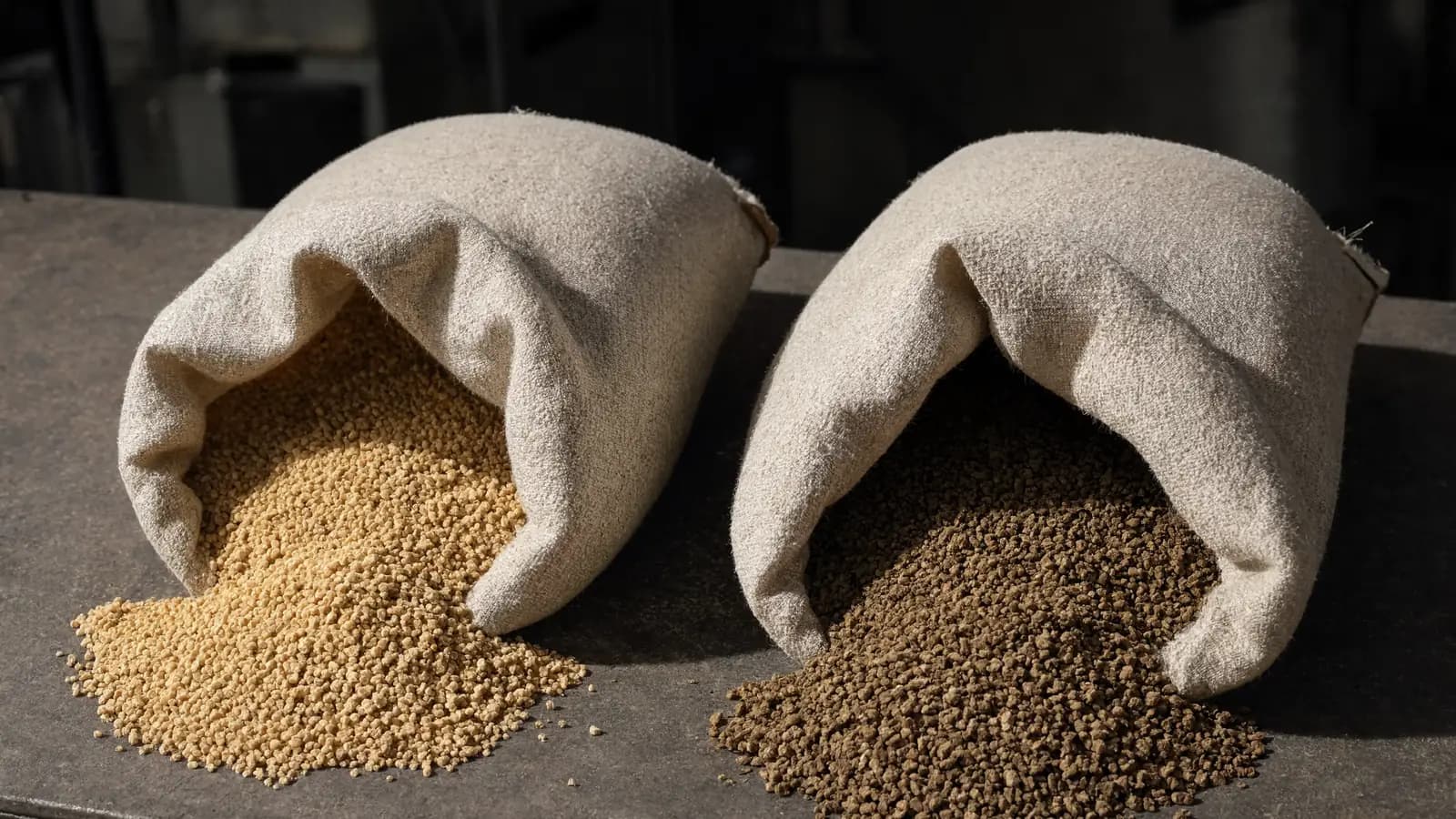
Published trials in this field largely used milled larvae meal, and very often defatted meal. That matters for four reasons at once, and they compound. Fat: whole larvae carry their full fat load, while a defatted meal has had most of it pressed out — so the energy contribution and the oxidation risk are not comparable. Particle size: a milled meal disperses through a mash or a pellet and is eaten as part of every mouthful; a whole larva is a discrete object an animal chooses to eat instead of something else. Chitin: milling and defatting change how the cuticle presents to the gut. And delivery: a formulated inclusion is eaten in proportion by every bird in the house, while whole larvae are eaten fastest and most by the birds that get there first.
| Whole dried larvae | Milled larvae meal | Defatted meal | |
|---|---|---|---|
| How it is fed | Scattered, hand-fed, in a treat dish — on top of the ration | Formulated into a mash or pellet | Formulated into a mash or pellet |
| Fat fraction | Full — the main reason the cap is low | Full, but dispersed and counted in the energy balance | Largely removed — a different ingredient in practice |
| Who controls the dose | The animal, unless you control it | The formulation | The formulation |
| Ration dilution risk | High — this is the whole problem | None — it is part of the ration | None — it is part of the ration |
| What the published trials mostly tested | Rarely this | Yes | Yes — very often this |
| Practical guidance | Treat cap, ~2–5% of daily dry feed | Trial inclusion rates, with reformulation | Trial inclusion rates, with reformulation |
Read the last two rows together. The inclusion rates that circulate in this category were mostly earned by a milled or defatted meal inside a reformulated diet, and they do not transfer to a handful of whole larvae thrown to a flock. Anyone quoting you a percentage without telling you which form it came from is quoting a number they have not thought about.
Whole larvae as a treat: the cap, and why it exists
For poultry and pet birds fed whole dried larvae, the working ceiling is roughly 2–5% of daily dry feed intake, and it should not displace the complete ration. That is a treat-feeding cap, not a formulated inclusion rate, and the difference is the entire point of the previous section. It is also not a number to feel clever about beating. Three separate mechanisms set it, and they do not depend on each other.
- Calcium to phosphorus. Larvae are not a calcium-balanced feed on their own, and the Ca:P ratio of the treat is not the Ca:P ratio the bird needs. Feed enough of it and you shift the ratio of the whole day’s intake away from what the complete ration was formulated to deliver. This matters most in exactly the birds people treat most: laying hens, who are building a shell every day, and growing birds laying down skeleton.
- Fat load. Whole larvae carry their fat with them — this is an energy-dense material, and energy the bird takes from a treat is energy it will not take from its ration. Over weeks that reads as reduced ration intake, and in cage or aviary birds with limited flight it reads as condition the owner did not intend to add.
- Ration dilution. The one that does the real damage. Every gram of treat is a gram of complete feed not eaten, and the complete feed is what carries the vitamin and trace mineral premix, the balanced digestible amino acids and the calcium source. Dilute it far enough and the bird is no longer eating a balanced diet — it is eating a balanced diet plus a correction it did not ask for.
- Count it, do not eyeball it. The cap is a share of daily dry feed, so it only means anything if you know what the daily dry feed is. Weigh the ration, take the percentage, and feed that — by hand, in a dish, at a set time. Scattering “a handful” is not a dose, and in a multi-bird pen it is a very unequal one.
The Gulf pet-bird market specifically
This region keeps birds seriously. Parrots, softbills and finches in the UAE and across the GCC are housed and doctored at a standard that would surprise most of Europe, and in the falconry-adjacent trade the standard of care is higher still. That culture is exactly why the treat problem is worse here, not better. The failure mode is not neglect — it is generosity. An owner who loves the bird, has the money, and has watched it react to a dried larva will feed more of them, and will feel good doing it. The cap is not there to be stingy. It is there because the ration is the diet and the larvae are not.
Milled inclusion: where BSFL behaves like a real formulation ingredient
Milled into a professional formulation, BSFL stops being a treat and starts being a protein and energy source you can actually control. This is where the published work lives and where the numbers below come from — as trial inclusion, not as a specification, and never without reformulating the diet around them.
The reformulation requirement is not a formality, and it is where most first attempts go wrong. Three things move at once when larvae meal enters a diet. Energy: the fat comes with the ingredient, so the metabolisable energy of the mix changes and the added oil has to come down. Digestible amino acids: reformulate on digestible amino acids, not crude protein — a crude-protein swap will quietly change the lysine and methionine the animal actually absorbs, and the chitin fraction means the crude protein figure itself flatters the ingredient slightly. Ca:P: the mineral contribution is real and it is not the same as the ingredient it replaced, so the ratio has to be rebalanced deliberately rather than discovered later in a bone or a shell.
Broiler and layer
Trial inclusion commonly runs on the order of 20–50 kg per tonne of milled larvae meal, replacing part of the soybean meal or fishmeal protein contribution. In a layer diet, watch the calcium arithmetic first and hardest — you are adding a mineral contribution to a ration whose calcium is already doing precise work every single day.
Fish
Fish diets carry the most room: trial inclusion on the order of 30–100 kg per tonne, generally as partial fishmeal replacement. The appeal is obvious — fishmeal is expensive, its supply is volatile, and every aquaculture operation in the region is hunting for defensible ways to use less of it. Replace in steps, hold the diet nutritionally equivalent, and watch growth and survival rather than the feed invoice.
Shrimp
Trial inclusion of roughly 20–75 kg per tonne. Shrimp bring their own constraint that has nothing to do with nutrition: the pellet has to survive in warm water long enough to be eaten by an animal that eats slowly and messily. A fat-bearing ingredient can affect binding and water stability, so the physical result of the pellet needs testing alongside the nutritional one. A formulation that is right on paper and falls apart in the pond is wrong.
Ruminants: no general dose
We do not offer one, and you should be suspicious of anyone who does. The reasons are honest ones. The evidence base in ruminants is thin compared with poultry and aqua — this ingredient was developed and tested for monogastrics, and that is where the trial work went. A functioning rumen also changes the question entirely: it degrades and reworks protein on its own, which removes much of the mechanism the ingredient is bought for, and how rumen microbes handle a chitinous cuticle is not a settled matter. Add the cost per tonne against the roughage-based rations that move real volume in the Gulf and the arithmetic rarely gets interesting. If someone quotes you a confident ruminant inclusion rate for BSFL, ask what it came from.
Chitin, honestly
Chitin is the structural polysaccharide in the larval cuticle. It is there, it is part of what you bought, and it does two things worth separating carefully — because the trade routinely runs them together and sells the second one on the strength of the first.
The first is a straightforward nutritional fact: chitin affects digestibility. It contains nitrogen, which means a crude protein figure counts some of it as protein when the animal cannot use it that way — so crude protein slightly overstates what the ingredient delivers, and the effect is larger in a later-harvested, more heavily cuticled batch. That is one more reason to formulate on digestible amino acids and one more reason the harvest stage on the COA is not trivia.
The second is the gut-health story, and here we should be plain. There is genuine scientific interest in chitin as an immune-modulating and prebiotic-type compound, and the mechanistic reasoning is not silly. But the evidence is thinner than the marketing suggests, the results are inconsistent across species and dose, and much of what is claimed for whole dried larvae in a retail bag has been extrapolated from work on purified chitin or chitosan — which is not the same material presented in the same way. It is an interesting open question. It is not a reason to pay a premium, and it is certainly not a health claim: this is a feed ingredient, and it does not prevent or treat disease. Buy BSFL for its protein, its fat and its palatability, all of which are real and measurable. If the chitin story firms up later, you will have got it for free.
Buying BSFL into the Gulf: substrate, paperwork and heat
Everything above applies anywhere larvae are fed. These points are specific to sourcing into the UAE, Saudi Arabia, Oman, Kuwait, Qatar and Bahrain — a set of markets that import the overwhelming majority of their feed and where an insect-derived product is still a relatively new thing to put in front of an inspector.
- The substrate question is regulatory here, not philosophical. What the larvae were reared on determines how the product is treated at import, and requirements for insect-derived feed materials are still developing and differ across GCC states. Confirm the current requirement with the destination authority — MOCCAE in the UAE, the relevant national authority elsewhere — for each shipment, rather than assuming last year’s answer still holds. A batch that is nutritionally excellent and documentarily wrong sits at the port at your expense.
- It is also halal-adjacent, and buyers in this market are entitled to an answer in writing. An animal reared on an undeclared substrate is a question you do not want to receive from a customer for the first time after you have sold them forty tonnes. Get the substrate declaration before the first order, keep it with the batch, and be able to hand it over. Suppliers who are vague about what they fed the larvae are being vague for a reason.
- Gulf heat and humidity attack the fat, and the fat is the point. This is a fat-bearing, high-surface-area product with no protective matrix around it — which makes it more vulnerable to oxidation than the bagged commodities sharing the shed with it. A batch that landed at Jebel Ali in specification can go rancid over a summer in a warehouse that is not climate-controlled, and a rancid larva is a palatability problem before it is anything else. Buy on delivered moisture, store cool and dark, keep the pack sealed, and rotate genuinely rather than nominally.
- Insist on the microbial and contaminant report per batch. The larva concentrates what its substrate contained — that is the same conversion efficiency the sustainability pitch celebrates, working in the direction nobody puts on a slide. This is not a reason to avoid the ingredient. It is a reason the report is not optional.
Frequently asked questions
Can dried black soldier fly larvae replace my chickens’ feed?
No. BSFL is a single ingredient, not a complete diet, and this is the most common and most costly error in the category. Whole dried larvae for poultry and pet birds should stay within roughly 2–5% of daily dry feed intake and must sit on top of the complete ration, not replace part of it. The complete feed carries the vitamin and trace mineral premix, the balanced digestible amino acids and the calcium. Larvae carry none of that in balance.
Why can’t I use published BSFL inclusion rates for whole dried larvae?
Because published trials largely used milled or defatted larvae meal formulated into a reformulated diet, and that is a different product fed a different way. Whole larvae carry their full fat load, arrive as discrete particles the animal chooses over its ration, present chitin differently to the gut, and are eaten unevenly across a flock. Those rates describe a controlled inclusion. Scattering whole larvae is not one, so the numbers do not transfer.
What should I ask a BSFL supplier for before ordering?
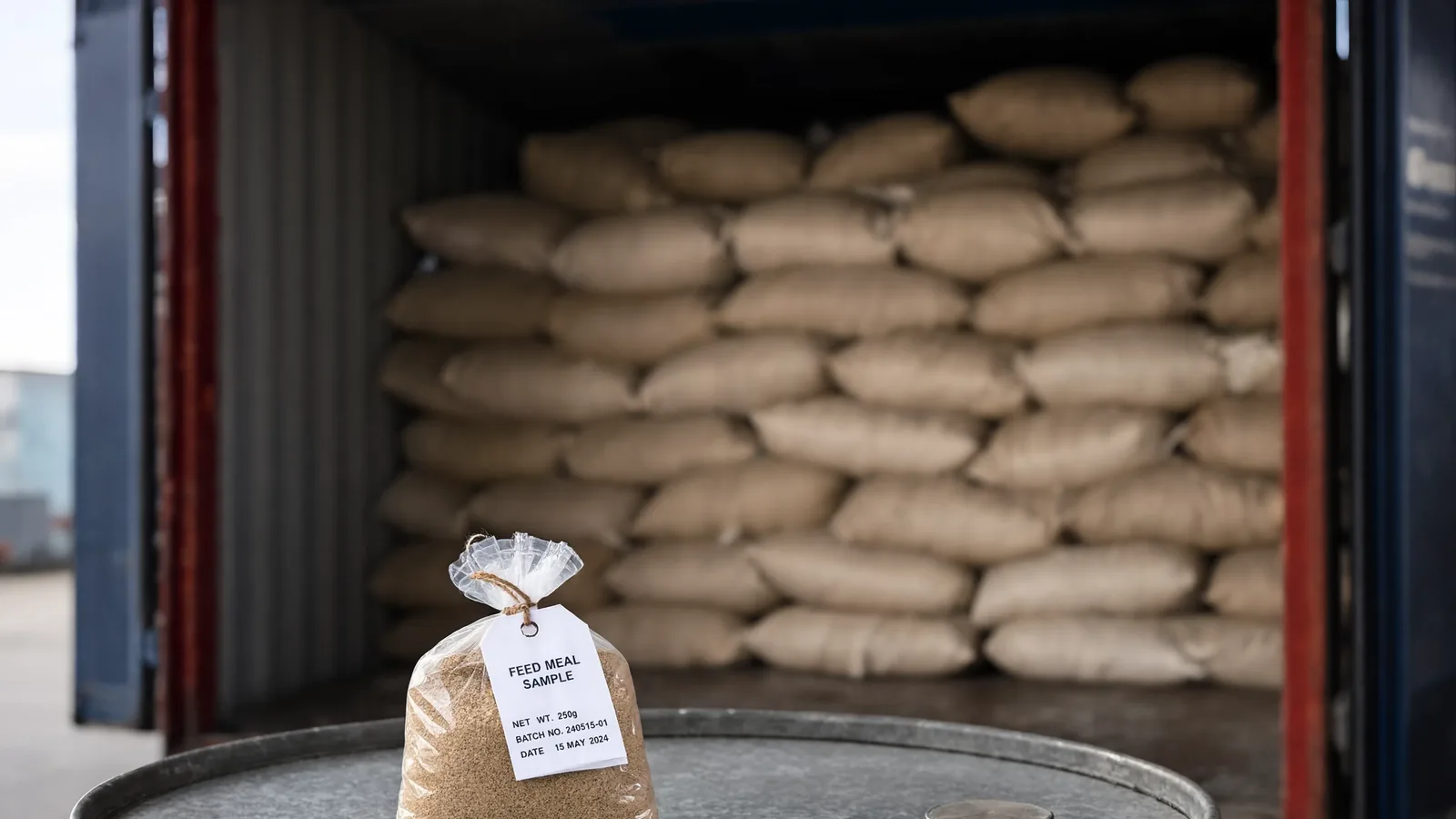
Four things, per batch: a certificate of analysis, a written declaration of the rearing substrate, a microbial and contaminant report, and the processing detail — harvest stage, slaughter method and drying method. Composition varies markedly with all of these, so without them you have not bought a specified product. Confirm import documentation with the destination authority separately for each shipment, since requirements for insect-derived materials are still developing across the GCC.
Does the chitin in BSFL improve gut health?
It is an open question, not a selling point. Chitin is genuinely interesting as an immune-modulating and prebiotic-type compound, but the evidence is thinner than the marketing suggests and results are inconsistent across species and dose. Much of what gets claimed comes from work on purified chitin, not whole dried larvae. What chitin definitely does is affect digestibility and inflate the crude protein figure slightly — which is a formulation consideration, not a health claim.
The bottom line
BSFL is a good ingredient wrapped in a bad sales pitch. Strip the pitch away and what remains is genuinely useful: a palatable, protein- and fat-dense material that works as a controlled treat for birds and as a real formulation ingredient once it is milled and the diet is rebuilt around it. That is worth buying. What is not worth buying is the version sold on sustainability slides and gut-health hints, priced on a story, and shipped without a substrate declaration.
So take the position: treat it like the ingredient it is. Cap the whole larvae, count them against the day’s feed, and never let them push the complete ration off the plate. Mill them if you want the numbers the literature actually earned, and reformulate on energy, digestible amino acids and Ca:P when you do. Demand the COA and the substrate declaration for every batch, because in this category they are not paperwork — they are the only description of the product that exists. Do that and BSFL earns its place. Skip it and you are feeding a story.
Sourcing this, or trialling it?
We trade animal and bird nutrition from Dubai, in direct contact with the manufacturers behind every product, with a certificate of analysis on every batch. Tell us the specification you need and we will tell you honestly whether we are the right supplier for it.