On a tilapia farm, feed is the majority of the cash that leaves the business. Not a large line item — the line item. Fingerlings are bought once. Labour is fixed. Power is real but predictable. Feed is bought every week, all cycle, and it is the only major cost that scales directly with the thing you are trying to produce. Which means feed conversion ratio is not a technical metric that belongs to the nutritionist. It is the business, expressed as a number.
Most farms know this and still manage FCR badly. Not because the operators are careless — the ones I meet at 6am at the pond edge are anything but — but because the number is easy to calculate, easy to flatter, and easy to blame on the feed bag. This article is about what actually moves it. Some of what follows will be unwelcome. Your aerator probably matters more than your feed brand.
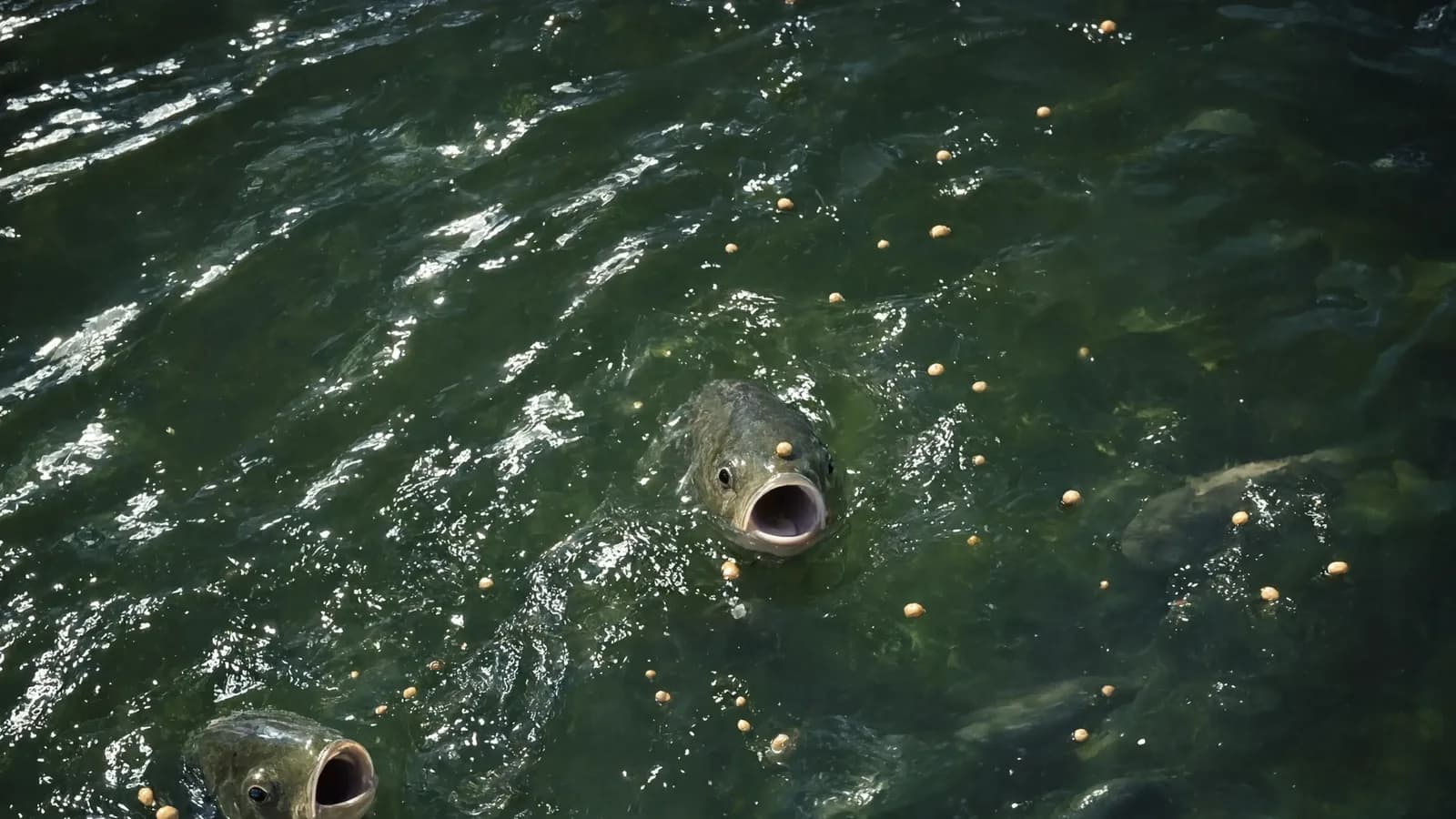
The whole point of floating feed: you can see the fish eat
Say it out loud and it sounds trivial. It is not trivial. It is the entire argument.
With a sinking pellet, feeding is an act of faith. You throw a measured amount, it disappears, and you find out whether it was the right amount three weeks later when you sample the fish — or never, because the sample is small and the arithmetic is forgiving. Overfeeding is invisible. That is the problem, and it is worse than it sounds, because the uneaten pellet does not simply vanish from the ledger. It settles on the bottom and becomes two losses at once.
The first loss is obvious: you paid for feed the fish did not eat. The second is the one that compounds. That pellet is now a nutrient load. It decays, it consumes oxygen doing so, it releases ammonia, and it degrades exactly the water your fish are living and growing in. Degraded water suppresses appetite and growth. Suppressed growth means more days on feed for the same harvest weight. More days on feed means more feed. You paid for the pellet, and then the pellet charged you again for the damage it did on the way out. This is not a rounding error. On a badly run pond it is the difference between a cycle that clears and a cycle that does not.
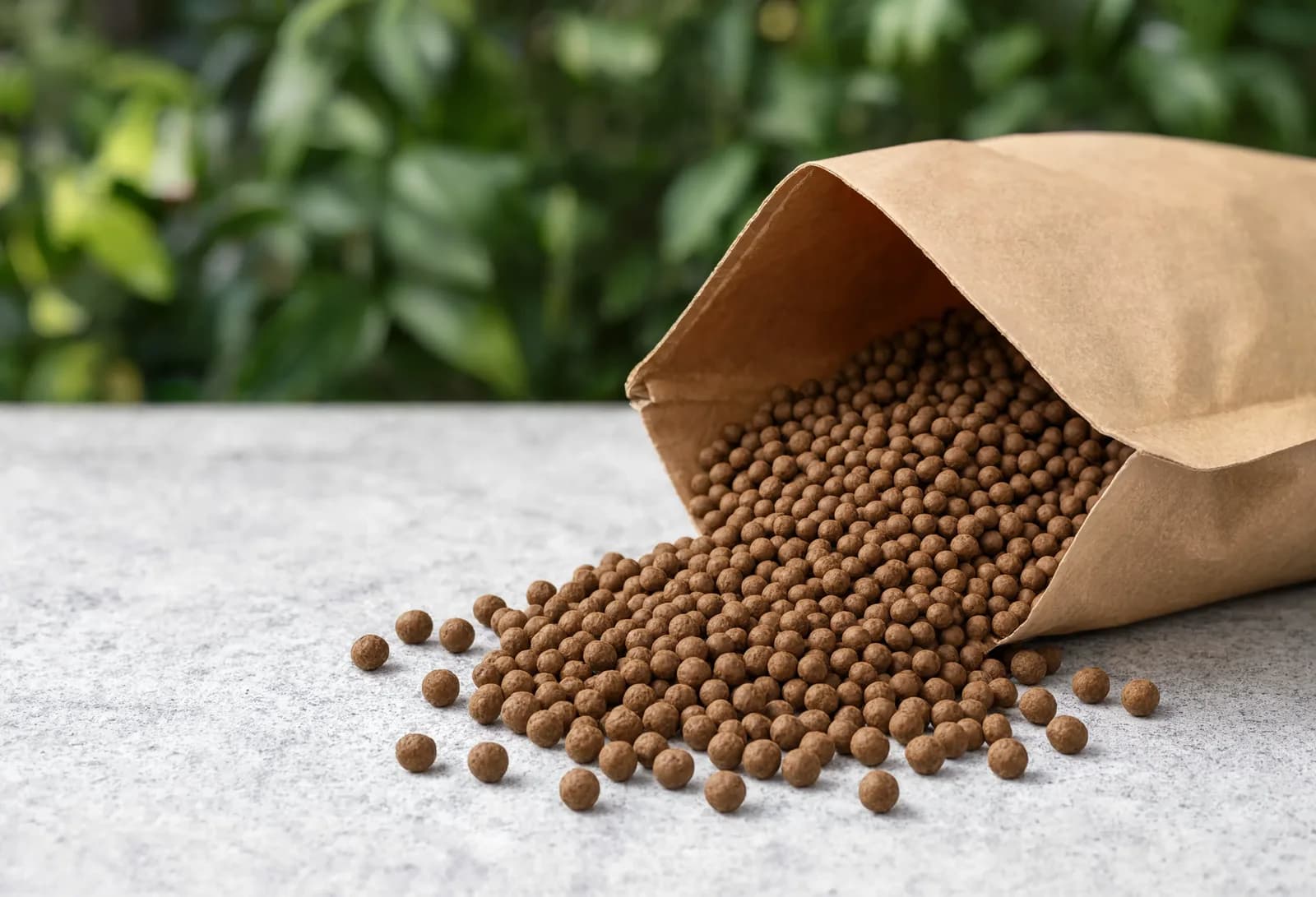
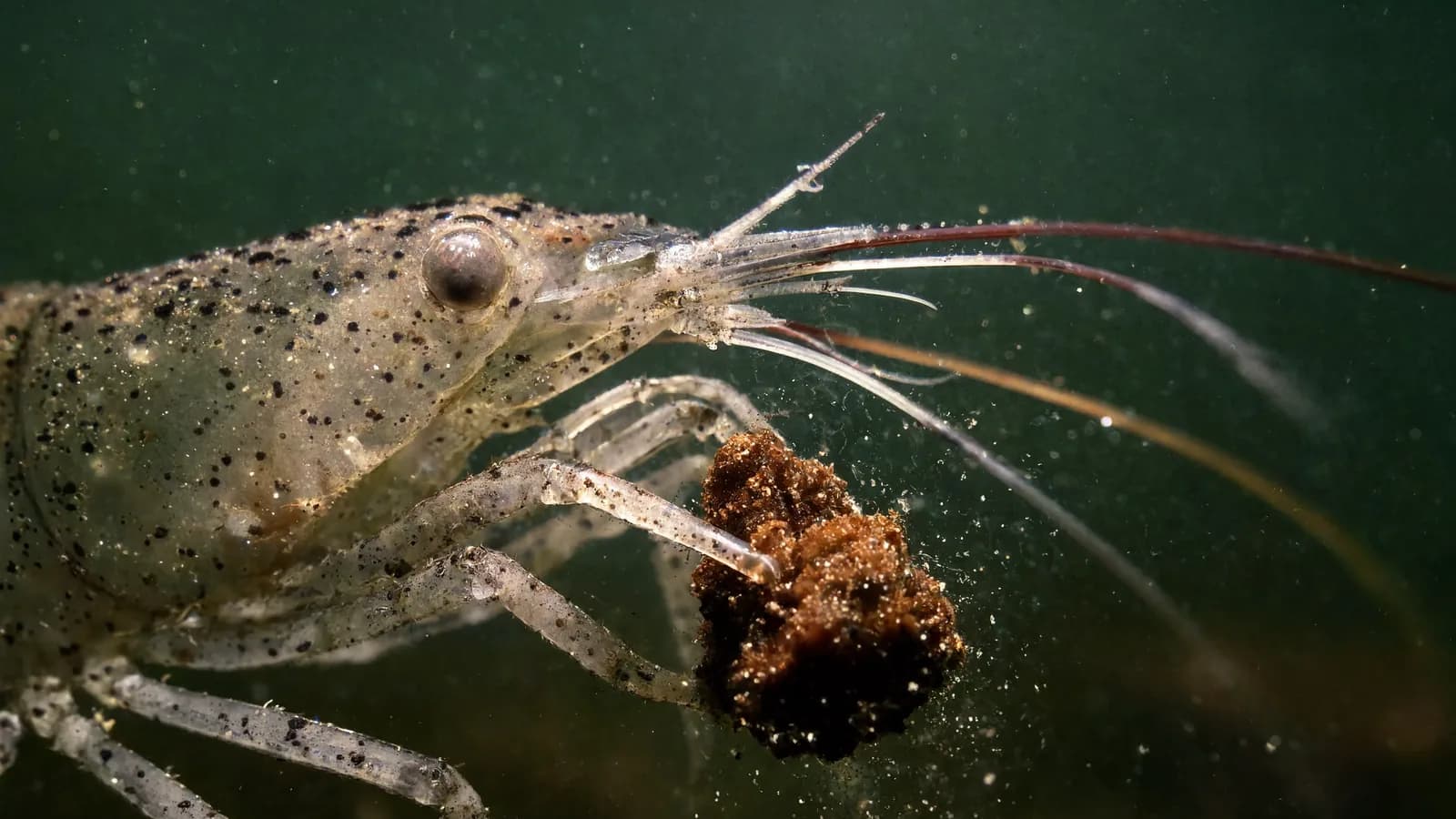
An extruded floating pellet removes the faith. The feed sits on the surface. The fish come up for it, or they do not. You watch. When the rise slows, you stop. That single change converts feeding from a schedule into an observation — and a schedule cannot tell you that the fish went off feed this morning because the dissolved oxygen crashed at 4am. The fish can. You just have to be standing there.
What FCR is, and the four ways farms fool themselves
FCR is feed used divided by weight gained. Two numbers. Both of them are harder to get right than they look, and every error in either one runs in the flattering direction. Let me be blunt about this: most reported FCRs on small farms are optimistic. Not because the fish are good — because the arithmetic is generous.
1. Feed offered is not feed eaten
Your FCR calculation uses the feed that left the store. Your fish used the feed that went down a throat. The gap between those two numbers is uneaten pellets, fines blown off the surface, feed lost at the pond edge and feed the birds took. With sinking feed you cannot even measure the gap. With floating feed you can watch it — which is precisely why the number gets more honest the moment you switch, and why some farms report a worse FCR after switching to floating feed. They did not get worse. They got accurate.
2. Unrecorded mortality quietly improves your FCR
This one deserves a moment. A fish that dies in week six ate feed for six weeks. That feed is in your numerator. But the fish is not in your harvest, so it is not in your denominator — and if you never recorded the death, your stocking number silently becomes a fiction and your average weight at harvest looks better than it was. Dead fish do not eat, but their biomass leaves the calculation while the feed they consumed stays in it. The net effect on a farm with sloppy mortality records is an FCR that looks respectable sitting on top of a survival rate nobody wrote down. If you do not have honest mortality records, you do not have an FCR. You have a mood.
3. Biomass estimation is a guess dressed as data
You cannot weigh the pond. So you sample, you extrapolate, and you feed a percentage of a number you inferred. If your sample net preferentially catches the smaller, slower fish — and it usually does — your average weight is low, your biomass estimate is low, and you underfeed. If you sample after a feed and catch the confident ones, you overfeed. Either way, the feeding rate is being applied to an estimate, and the estimate is doing more work in your FCR than the feed specification ever will.
4. Biological FCR is not economic FCR
Biological FCR asks how many kilograms of feed built a kilogram of fish. Economic FCR asks how many dirhams of feed built a dirham of fish. They are not the same question and they do not always have the same answer. A higher-protein, higher-cost feed can deliver a genuinely better biological FCR and still lose you money, because the improvement in the ratio did not cover the premium per tonne. Farms chase the biological number because it is the one on the datasheet. The bank only ever sees the other one. Track feed cost per kilogram of fish harvested, and treat biological FCR as a diagnostic — useful for finding out what went wrong, useless as a target on its own.
The levers that actually move FCR, honestly ranked
Here is the ranking most feed salesmen will not give you, because formulation is at the bottom of it and formulation is what they sell. The order below is roughly how much each lever moves the number on a typical pond, and roughly what it costs to fix.
| Lever | Effect on FCR | Cost to fix |
|---|---|---|
| Dissolved oxygen | Largest single lever. A fish in low DO stops eating and stops converting. No feed specification repairs that. | Aeration and power — real capital, best return on the farm |
| Water temperature | Sets appetite and metabolic rate. Outside the comfortable band, intake and conversion both fall. | Mostly unmanageable in open ponds — manage the feeding rate around it instead |
| Pellet size vs mouth size | A pellet too large is refused outright. Too small wastes swimming energy and makes fines. | Free — it is an ordering decision, not a purchase |
| Feeding rate & frequency | Overfeeding is paid twice: wasted feed, then degraded water. Underfeeding costs days on feed. | Labour and attention only |
| Grading & size uniformity | A wide size spread means the big fish eat first and the spread widens further. | Labour, handling stress, a planned grading day |
| Water durability & fines | Fines are pure loss — paid for, never eaten, straight into the nutrient load. | Supplier selection and handling discipline |
| Formulation & protein level | Matters — but last. A good formulation cannot outrun a bad pond. | Highest cost per point of improvement |
Dissolved oxygen comes first, and it is not close
A tilapia in low dissolved oxygen does two things: it stops eating, and it diverts what it has already eaten away from growth and toward simply staying alive. Both ends of the FCR fraction move against you at once. There is no formulation, no additive and no premium pellet that repairs a pond at 2 mg/L at dawn. If you are choosing between a better feed and a better aerator, buy the aerator. Then buy the meter, because an aerator you cannot verify is a noise-maker.
Temperature sets the ceiling on everything else
Tilapia is a warm-water fish and that is precisely why it is farmed here — but warm has an upper end, and the appetite curve is not symmetrical around it. Below the comfortable band the fish simply eats less and grows slowly; feed offered on a fixed table becomes feed wasted. Above it, appetite can hold while the water's capacity to carry oxygen falls, which is the dangerous combination: a hungry fish in thin water. Feed to what the fish shows you, not to what the chart printed in a cooler country says the fish should want.
Satiation versus the table
A feeding table gives you a percentage of biomass per day by size and temperature. It is a starting point and it is a good one. It is not an instruction. The table does not know your dissolved oxygen this morning, your biomass estimate is a guess anyway, and the fish in front of you have information the table does not. Use the table to decide roughly how much to bring to the pond. Use the fish to decide how much of it goes in. That is what the floating pellet bought you — do not pay for the instrument and then ignore the dial.
Pellet size, stage by stage — and the cost of stepping up late
Pellet size is the cheapest lever on the list and the most commonly fumbled. It costs nothing to get right — it is an ordering decision, not a purchase — and getting it wrong wastes feed at both ends of the error.
Too large, and the fish simply refuses it. It will mouth the pellet, fail, and leave it. That feed does not get eaten later; it sits and softens and joins the nutrient load. Too small, and the fish burns more energy chasing more pellets for the same mouthful of nutrition — and the smaller the pellet, the more of the bag arrives as fines. Both errors show up in your FCR and neither shows up on the invoice as anything other than "feed".
Our graded range runs 2, 3, 4.5 and 6 mm, which covers fry through to harvest. The table below is the shape of a normal progression, not a prescription — your fish, your water and your grading discipline decide the actual step points.
| Pellet size | Stage | What to watch |
|---|---|---|
| 2 mm | Fry and early fingerlings | Fines fraction and even spread — small fish cannot chase a clumped feed |
| 3 mm | Advanced fingerlings | The first step-up — the point farms most often delay |
| 4.5 mm | Grow-out | Feeding response at the surface; energy wasted on undersized pellets |
| 6 mm | Late grow-out to harvest | Refusal by the tail of the population — a size-spread signal, not a pellet fault |
Stepping up too late is the expensive direction
Farms delay the step-up because the small pellet is visibly being eaten and nothing looks wrong. Nothing looks wrong for weeks. What is happening is that your growing fish are spending real energy collecting many small pellets, and — worse — you are handing an advantage to whoever gets there first. Small pellets favour fast, aggressive fish. The hierarchy tightens, the size spread widens, and a wide spread is self-reinforcing: the big fish eat first at every meal thereafter. Come harvest you have poor uniformity, a grading job you did not budget for, and a batch that prices as two products instead of one. None of that appears in your FCR. All of it appears in your revenue.
- Step up on mouth size, not on the calendar. Sample, look at the fish, and move when the population can physically take the next size — not when the bag runs out.
- Overlap the transition. Blend the two sizes for a few days rather than switching overnight, so the tail of the population is not suddenly presented with a pellet it cannot handle.
- Grade before the spread sets. Grading is stressful and costs labour, and it is still cheaper than feeding a bimodal population to harvest on one pellet size.
- Watch refusal at the surface. On floating feed, a fish that will not take the new size tells you immediately. That is a diagnosis you cannot get from a sinking pellet at any price.
Water durability, fines, and the Dubai warehouse problem
Water durability is how long a pellet holds together once it is wet. For a floating tilapia feed it means the pellet stays intact and on the surface long enough for the fish to find it and eat it — that is the whole functional requirement. A pellet that disintegrates in a few minutes is not a floating feed with a flaw; it is a sinking feed with a delay, and it has quietly taken back everything you paid extra for extrusion to get.
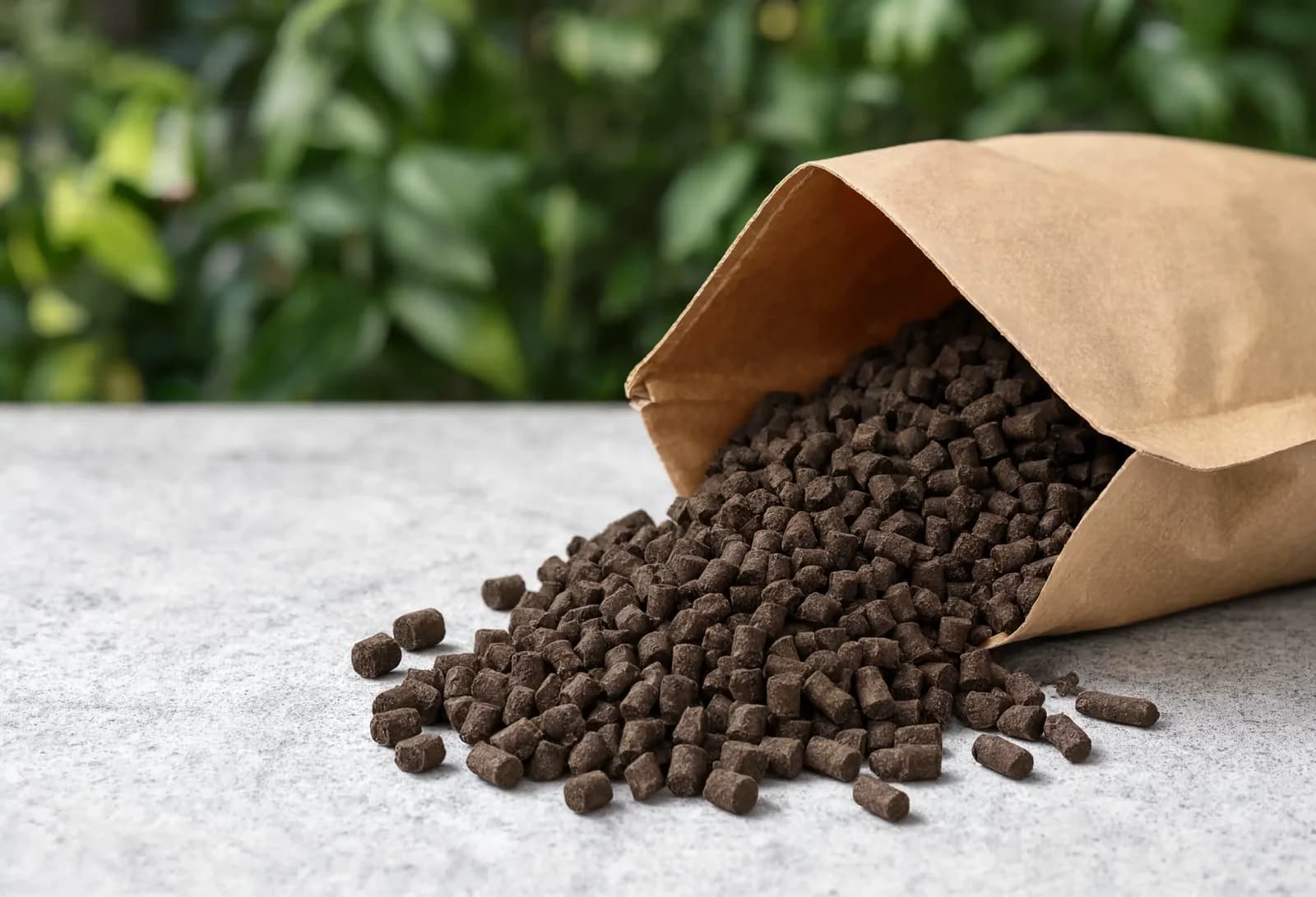
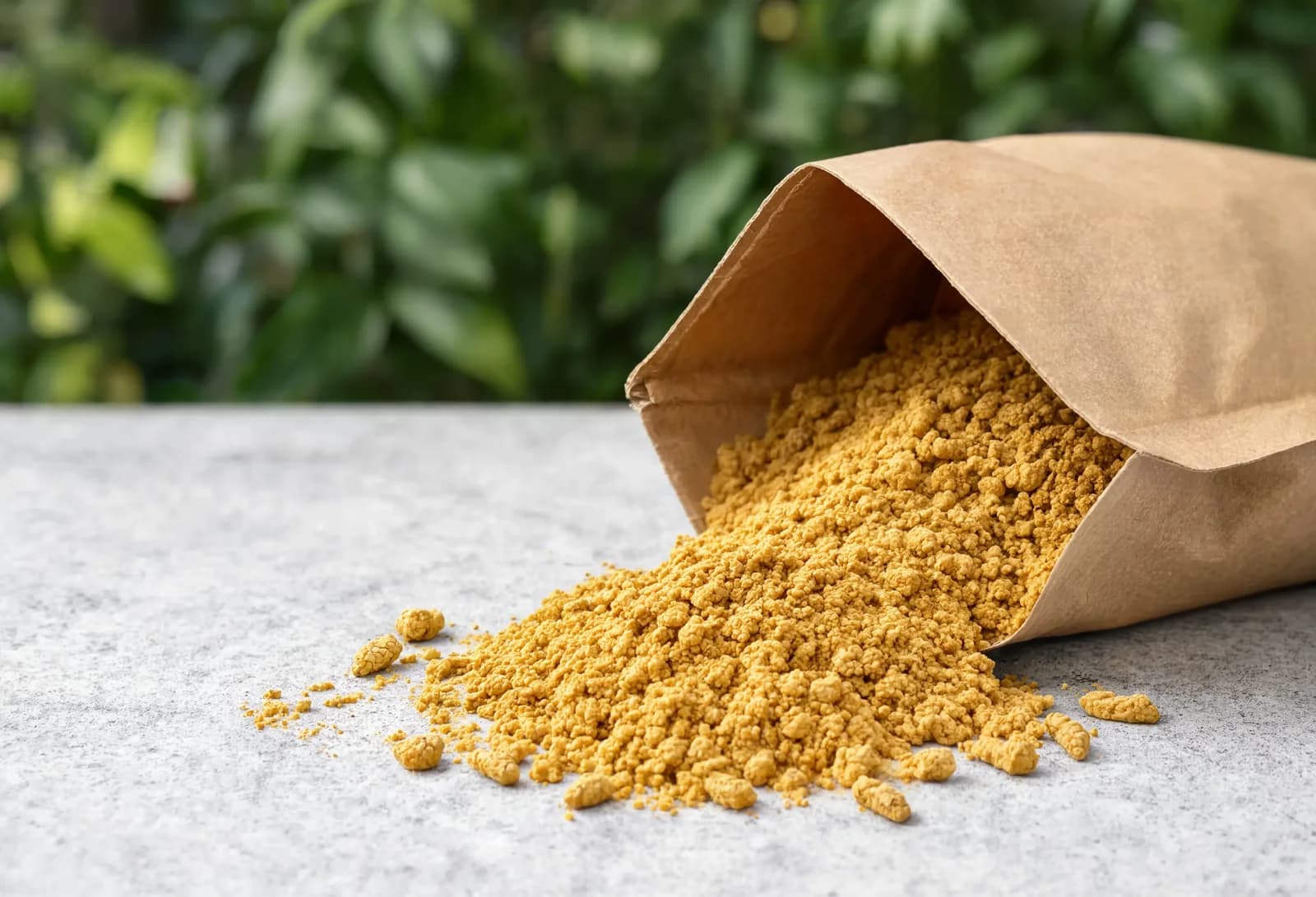
Fines are the other half of the same subject and they deserve plain language: fines are pure loss. Dust does not float meaningfully, does not get eaten, and goes straight into the nutrient load — you paid for it, the fish never saw it, and now it is degrading the water. Every percentage point of fines is a percentage point added directly to your feed cost and subtracted from your water quality. There is no upside to it anywhere.
Here is what farms miss: most fines are made before the pellet ever touches water. They are made in the bag. Extruded pellets are light and relatively fragile, and a 25 kg bag dropped, dragged, stacked too high or thrown off a tailgate in Gulf heat abrades its own contents. A pellet that left the mill in specification can arrive at the pond as feed plus dust because of how it travelled the last two kilometres. Handling is a feed quality decision, and it is one nobody bills you for.
Why aqua feed is more fragile in a Gulf shed than a bag of barley
A bag of barley is forgiving. It is a whole grain, it is low in fat, and a hot warehouse mostly just makes it a hot bag of barley. An extruded aqua pellet is a different animal. It is porous by design — that porosity is what makes it float — which means it has enormous internal surface area exposed to whatever air is in your store. It carries added fat, and that fat oxidises. Heat accelerates oxidation, humidity feeds mould, and porosity invites both in. The same August warehouse that a bag of barley shrugs off will strip palatability out of an aqua pellet, and a pellet the fish finds less appetising is a pellet that gets eaten more slowly and refused more often. Your FCR degrades and the bag looks fine.
- Buy against your turnover, not against the price. Six months of feed bought to catch a good price is usually a false economy in this climate — the discount is fixed and the oxidation is not. You banked a saving per tonne and paid it back in refusals and slow growth on the last third of the pallet.
- Rotate genuinely, not nominally. First in, first out means the oldest pallet is the one being opened — not the one nearest the door.
- Store on pallets, away from walls, out of direct sun, and off the ground. Basic, unglamorous, and it is the difference between a pellet that performs and one that merely exists.
- Handle bags like the pellet is fragile, because it is. Do not drag, do not drop, do not over-stack. Every metre of abuse is fines you will pay for twice.
- Open a bag and look at the bottom of it. The dust that pools there is your fines fraction and your handling report, free of charge, every single delivery.
Protein: more is not better, and this one is counterintuitive
Buyers ask for the protein number first and use it to rank feeds. I understand why — it is the one figure on the bag that looks like quality. It is not. Protein is a specification, not a score, and over-formulating it does two bad things at once.
The first is obvious: protein is the most expensive fraction of the formula, so you paid more per tonne. The second is the one that catches people. A fish cannot store surplus protein. What it does not need for growth it deaminates and excretes as nitrogen — into the pond. Into the water it lives in. So over-formulated protein raises your feed cost and raises the ammonia load, and the ammonia load degrades the water, and degraded water suppresses growth. You bought a more expensive feed and got a worse pond out of it. That is the counterintuitive part, and it is worth sitting with: past the point of requirement, extra protein is not a wasted opportunity, it is an active pollutant that you paid a premium for.
This is why our tilapia range is specified at 25–32% crude protein as a band, not a single number. The band is not vagueness — it is the point. A fry needs the top of that range because it is building tissue fast on an immature gut. A fish in late grow-out does not, and feeding it starter-grade protein is paying a premium to pollute your own pond. Match the protein to the stage. The right protein level is the lowest one that does not limit the fish, and that number moves through the cycle.
Plant protein and reducing fishmeal
Fishmeal is expensive and its supply is volatile, and every operation in the region is looking for defensible ways to use less of it. Tilapia is a comparatively forgiving species here — it handles plant protein better than a marine carnivore does, which is part of why it is farmed as widely as it is. Fermented soybean meal is one of the more credible partial replacements, precisely because fermentation addresses the anti-nutritional factors that limit how much raw soy a young fish tolerates. The caveats are the same as they are everywhere on this site, and they are not decoration: it is a partial replacement, trial work typically supports replacing on the order of 10–20% of fishmeal protein, and you must reformulate on digestible amino acids rather than swapping tonne-for-tonne on crude protein. Replace in steps. Watch growth and survival, not the feed invoice.
What changes when the pond is in the Gulf
Everything above is true anywhere there is a tilapia. These next points are why the FCR conversation is different in the UAE, Saudi Arabia and Oman than it is in the textbook.
Warm water holds less oxygen. Connect the two facts.
This is the single most important sentence in the article for a Gulf farm. We established that dissolved oxygen is the largest lever on FCR. Now add the physics: the warmer the water, the less oxygen it can dissolve at saturation. Our water is warm. So the ceiling on available oxygen is lower here before you have added a single fish — and then you add fish, which consume it, and feed, which decays and consumes more of it, and a hot afternoon, which drives it lower still. Every farm in this region operates closer to the oxygen floor than a farm in a temperate country does at the same stocking density. That is why regional operations that treat aeration as optional get punished for it faster and harder than they expect, and why a stocking density copied from a foreign manual is a genuinely dangerous thing to copy.
Salinity, desert farms and lined systems
A lot of regional tilapia is not grown in the freshwater pond the manuals assume. It is grown inland, in brackish groundwater, in lined ponds and tanks across the UAE and Saudi Arabia, and in RAS units where the water is an asset you recirculate rather than a resource you flush. Each of these changes the feeding conversation. Tilapia tolerates brackish water well, but tolerance is not indifference — salinity carries a metabolic cost, and a fish paying that cost has less energy left for growth from the same feed. In a RAS or a lined system the argument for floating feed gets sharper still, because there is no forgiving pond bottom and no natural productivity to absorb your mistakes. Every uneaten pellet in a recirculating system goes directly into a filter you own and maintain. Overfeeding stops being an abstraction and becomes a bill.
Imported feed, lead times and paperwork
GCC aquaculture is growing, and it is growing because food-security policy is pushing it — governments across the region have decided that importing the overwhelming majority of the fish on the table is a strategic exposure worth spending money to reduce. That investment is real and the sector is expanding on the back of it. But the feed largely still arrives by sea. Lead times punish single-sourcing, and a farm that runs out of the correct pellet size does not pause the cycle — it feeds the wrong size, which is how a documentation delay quietly becomes an FCR problem two months later. Health certificates, origin declarations and the mycotoxin panel need to match what the destination authority requires — MOCCAE in the UAE, and the relevant national authority elsewhere in the GCC. Requirements are updated periodically, so confirm per shipment rather than relying on last year's file. A batch that is nutritionally excellent and documentarily wrong sits at the port, and your fish keep getting hungry on schedule.
How to run a feeding trial that tells you something
Most on-farm feed trials produce no usable answer, and it is almost always the same three mistakes. Change one variable. If you switch feed brand and pellet size and feeding frequency in the same week because the new supplier arrived and you reorganised, you have learned nothing — you have a result with three fathers. Keep a genuine control: the same species, the same stocking date, the same water, run at the same time. A comparison against last cycle is not a control, it is a memory, and last cycle had different weather.
Then measure what you claim to move — and measure the confounders, not just the outcome. If you are testing a feed, you must log dissolved oxygen and temperature throughout, because if the two ponds diverged on DO then your feed trial was an aeration trial and you did not notice. Record mortality daily and honestly, including the fish you would rather not count; we covered why. Weigh a real sample properly at fixed intervals rather than eyeballing at harvest. And run it long enough for the effect to appear, but be honest about which effects a whole-cycle FCR can even detect — it is a blunt instrument, and a change that only touches the first three weeks will vanish inside it.
Frequently asked questions
Will switching to floating feed improve my FCR?
It will improve your ability to manage FCR, which is not the same promise. Floating pellets let you watch the fish eat and stop when the rise slows, so overfeeding becomes visible instead of invisible. That is where the gain comes from — better feeding decisions, made daily. Some farms even report a worse number after switching, because the old number was flattered by feed that sank unseen. They did not get worse; they got accurate.
What protein level should I feed my tilapia?
Match it to the stage rather than picking one number for the whole cycle. Our range is specified at 25–32% crude protein as a band for exactly that reason: fry need the upper end while they build tissue fast, and late grow-out fish do not. Over-formulating costs you twice — a higher price per tonne, and more nitrogen excreted into the water your fish live in, which degrades the pond and suppresses the growth you were paying for.
When should I move up to the next pellet size?
When the mouth can take it, not when the calendar or the bag says so. Sample the fish and look at them. Delaying the step-up is the expensive direction: small pellets favour the fast, aggressive fish, the size spread widens, and a wide spread is self-reinforcing because the big fish eat first at every meal afterwards. Blend two sizes for a few days across the transition so the smaller tail of the population is not left behind.
How long can I store aqua feed in a Gulf warehouse?
Less comfortably than you would store grain, and that surprises people. An extruded pellet is porous by design — that is what makes it float — so it has huge internal surface area, and it carries added fat that oxidises. Heat accelerates that, humidity feeds mould. Buy against your turnover rather than against a price: six months of feed bought to catch a discount usually loses palatability on the last third, and a pellet the fish finds less appetising is eaten slower and refused more.
How much should I feed my tilapia per day?
Start from a percentage of biomass and let the fish correct you. Fingerlings take roughly 5–8% of their body weight per day, grow-out fish 2–4%, split into two or three meals in the warm part of the day when appetite is highest. Then watch the response at every meal — floating feed exists precisely so you can stop when the rise slows instead of emptying the scoop. The percentage table is a starting point; the fish at the surface are the truth.
The bottom line
Here is the position, plainly. Your FCR is probably not what your spreadsheet says it is, and the fastest improvement available to most tilapia farms in this region is not a better feed — it is an honest mortality log, a working DO meter and someone standing at the pond watching the fish eat. Floating feed matters because it makes that watching possible; it converts feeding from a schedule you follow into an observation you act on. The rest of the levers follow in order: oxygen, temperature, pellet size, feeding discipline, grading, handling. Formulation is last, and the protein number on the bag is the most overrated figure in the industry.
Fix the water first. Then buy a pellet you can trust, in the size the fish can actually eat, and store it like it is fragile — because it is. Do that and a good FCR is achievable with management. Skip it and no bag on the market will save you, no matter what the datasheet claims.
Sourcing this, or trialling it?
We trade animal and bird nutrition from Dubai, in direct contact with the manufacturers behind every product, with a certificate of analysis on every batch. Tell us the specification you need and we will tell you honestly whether we are the right supplier for it.